
10 Haircut Ideas For Round Face
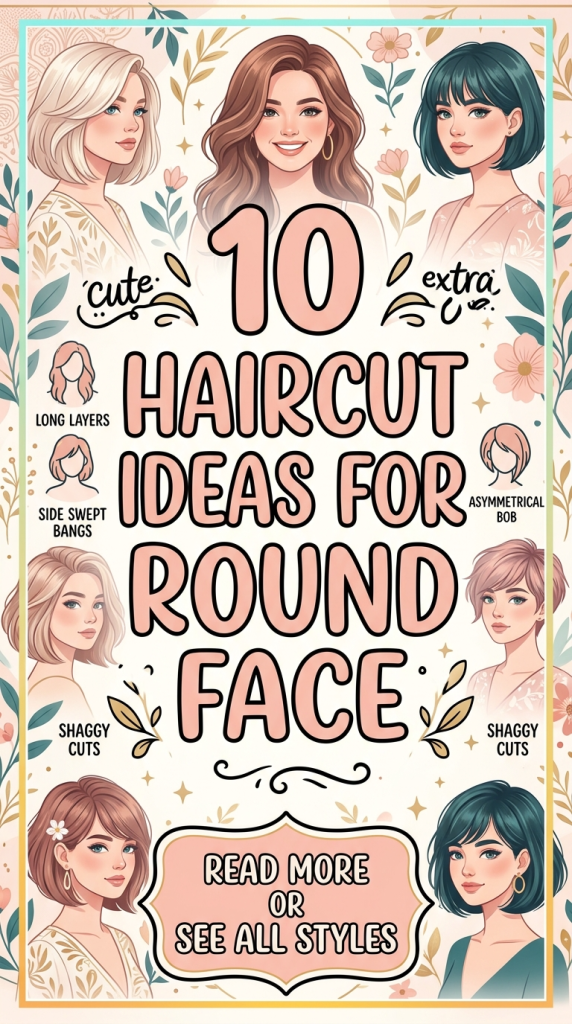
Haircuts designed for round face shapes often focus on creating balance and visual structure. A round face typically features soft curves, similar width and length proportions, and minimal angular definition. Because of these characteristics, many hairstyle ideas aim to introduce vertical lines, layers, or asymmetry that visually elongate the face. Pinterest inspiration boards frequently feature haircut ideas for round faces because many people search for hairstyles that complement their facial structure while remaining stylish and practical.
The right haircut can influence how facial proportions appear by directing attention to specific areas such as the cheekbones, jawline, or crown. Medium and layered styles often work well because they introduce movement and dimension. Some cuts incorporate longer face-framing sections, while others rely on texture and volume placement to create contrast with the rounded shape.
This article presents ten practical haircut ideas that suit round face shapes. Each idea explains the concept behind the haircut and provides a clear step by step explanation of how the style can be created. Readers will learn how layering, length placement, and fringe variations influence facial balance. These ideas offer useful inspiration for choosing haircuts that combine modern design with flattering structure.
Why This Idea Is Trending or Useful
Haircuts designed specifically for round faces have gained attention on Pinterest because many users search for personalized hairstyle inspiration. Instead of choosing styles solely based on trends, people increasingly consider how haircuts interact with their face shape. This shift toward tailored hairstyling explains why haircut ideas for round faces appear frequently in trending Pinterest collections.
The practical value of these haircuts lies in their ability to adjust visual proportions. Strategic layering, side parts, and longer front sections can create the illusion of a slightly longer face. These techniques help balance the natural curves associated with round facial structures. Hairstylists often use these design strategies to produce hairstyles that feel flattering without requiring complicated styling methods.
Accessibility is another reason these haircut ideas remain popular. Most of the styles can be created using standard haircutting techniques and basic tools. They also work well with different hair textures, including straight, wavy, and slightly curly hair. This flexibility makes the haircut ideas useful for a wide range of individuals seeking modern hairstyles that complement round facial shapes.
Materials and Preparation
Preparing for a haircut designed for round faces requires basic hairstyling tools and a clear understanding of the desired haircut structure. Professional stylists typically use hair cutting scissors, thinning shears, a fine comb, sectioning clips, and a spray bottle to lightly dampen the hair. Damp hair allows more precise trimming and improves control during layering techniques.
Preparation begins by washing the hair to remove any styling products that may interfere with cutting accuracy. Once clean, the hair is lightly dampened and combed in its natural direction. Sectioning the hair into distinct areas—usually crown, sides, back, and fringe—helps maintain symmetry during the cutting process. Organized sections ensure that each area is trimmed evenly and blended smoothly.
Planning the haircut shape is particularly important for round face styles. Stylists often focus on adding length around the front sections or introducing layers that create vertical movement. These features visually elongate the face and reduce the emphasis on rounded contours. Reviewing reference images can also help clarify the desired style. Proper preparation ensures the haircut maintains balanced proportions while enhancing the overall facial structure.
MAIN IDEAS SECTION
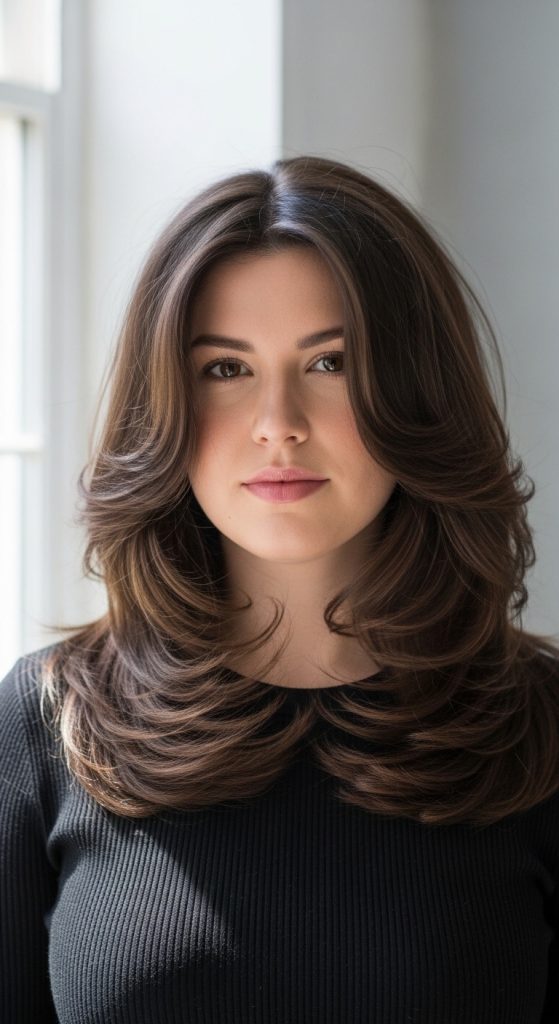
Idea 1: Long Layered Haircut
How to Create
A long layered haircut is one of the most effective hairstyles for round faces because it introduces vertical lines that visually elongate the face. The layers begin below the chin and continue gradually toward the ends of the hair. This placement prevents the layers from adding volume near the cheeks, which could emphasize facial roundness. Instead, the longer layers direct attention downward, creating a balanced silhouette.
Pinterest inspiration boards frequently highlight long layered haircuts because they combine elegance with practicality. The layers create movement and dimension without removing too much length. This allows the hairstyle to remain versatile for different styling options such as waves, straight finishes, or simple ponytails. The haircut works well for individuals who prefer longer hair while still wanting a structure that complements their facial shape.
The layering technique also helps distribute hair weight evenly. This prevents the hair from appearing too heavy around the sides of the face. The overall effect is a hairstyle that feels soft, flowing, and visually balanced.
To create this haircut, the stylist begins by trimming the back section to establish the overall length. The hair is typically kept below the shoulders to maintain vertical balance.
Next, the stylist introduces layers starting slightly below the chin. These layers are cut gradually so they blend smoothly into the longer sections of hair.
The final step involves shaping the front layers to frame the face while maintaining length. This approach ensures that the layers enhance the face shape without emphasizing its roundness.
Idea 2: Shoulder-Length Lob
How to Make
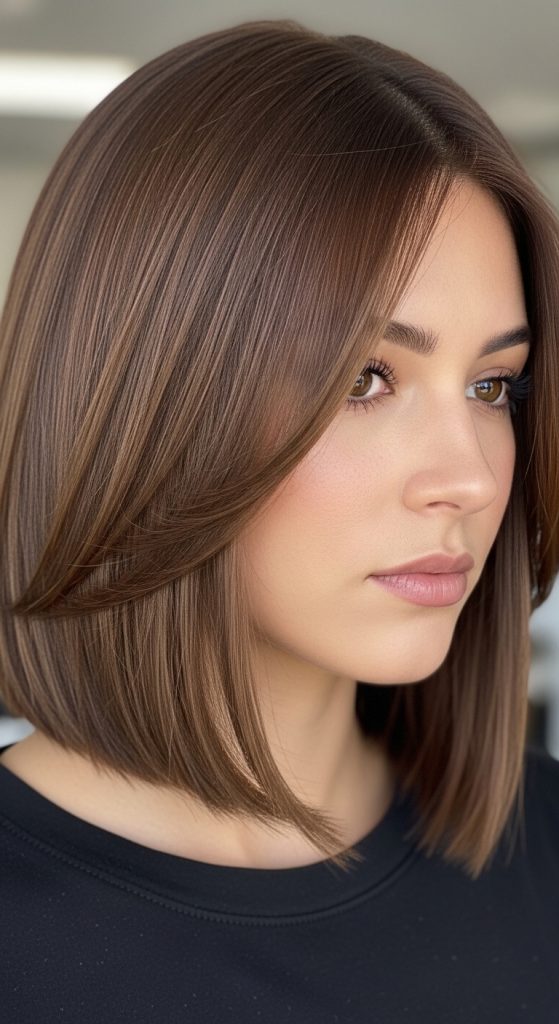
The shoulder-length lob, also known as a long bob, is a versatile haircut that works well for round face shapes. The hair typically falls just below the shoulders and often features subtle layering around the ends. This length helps create the appearance of a longer face while maintaining a manageable hairstyle.
Pinterest hairstyle collections frequently feature the lob because it represents a modern interpretation of classic medium-length haircuts. The style can be worn straight for a sleek appearance or styled with loose waves for added texture. The moderate length allows the hair to frame the face without creating excessive volume near the cheeks.
The lob also works well with side parts, which introduce asymmetry to the hairstyle. This design technique helps shift visual focus away from the center of the face and creates a more elongated appearance.
To create the shoulder-length lob, the stylist begins by trimming the back section to the desired length. The hair is usually kept slightly longer toward the front to create a gentle angled shape.
Next, the stylist blends the sides with subtle layers to maintain movement while preserving the structured outline.
The final step involves refining the front sections so they frame the face gracefully. This process produces a balanced medium haircut that complements round facial features.
Idea 3: Layered Shag Haircut
Step-by-Step Guide
The layered shag haircut introduces multiple layers throughout the hair to create movement and texture. This style works well for round faces because the layers create vertical flow rather than horizontal volume. The haircut often includes shorter layers near the crown and longer sections toward the ends, which adds dimension and height.
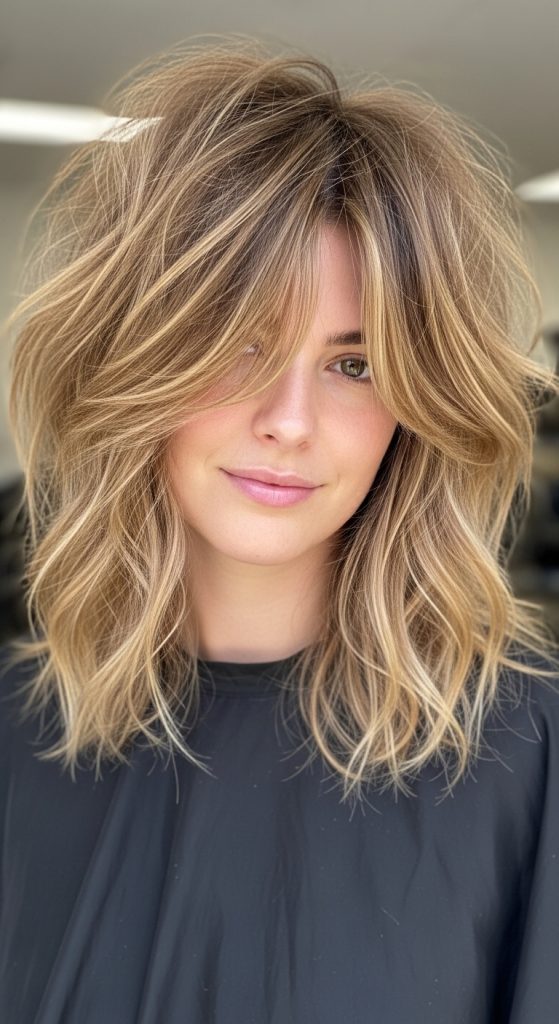
Pinterest inspiration frequently highlights shag haircuts because they combine vintage design elements with modern styling techniques. The layered structure produces a relaxed appearance while maintaining an organized silhouette. The hairstyle also works well with wavy textures, as the layers encourage natural movement.
Another advantage of the shag haircut is its adaptability. The style can be worn casually with natural waves or styled more neatly for formal occasions. The layered design helps balance facial proportions while keeping the haircut visually dynamic.
To create this haircut, the stylist trims the baseline length first. The hair usually falls around shoulder level or slightly below.
Next, shorter layers are introduced near the crown to build volume. Additional layers are blended throughout the mid-lengths using point-cutting techniques.
The front sections are then shaped carefully so they frame the face without adding width near the cheeks. This step ensures the hairstyle complements the round facial structure.
Idea 4: Side-Parted Medium Cut
How to Create
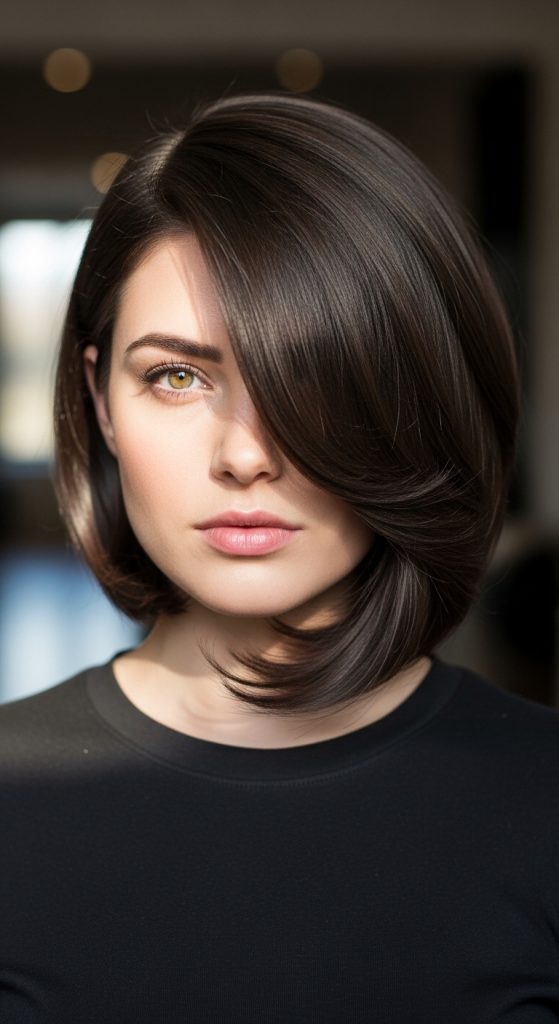
A side-parted medium haircut introduces asymmetry that helps balance round facial shapes. The deep side part shifts attention away from the center of the face and creates a vertical line that visually lengthens the overall appearance.
The haircut is created by trimming the hair to shoulder length and then shaping soft layers throughout the ends. The side part is positioned slightly off-center to create asymmetry.
Idea 5: Angled Bob
Execution Process
An angled bob keeps the back section shorter while gradually increasing length toward the front. This design introduces diagonal lines that visually elongate the face.
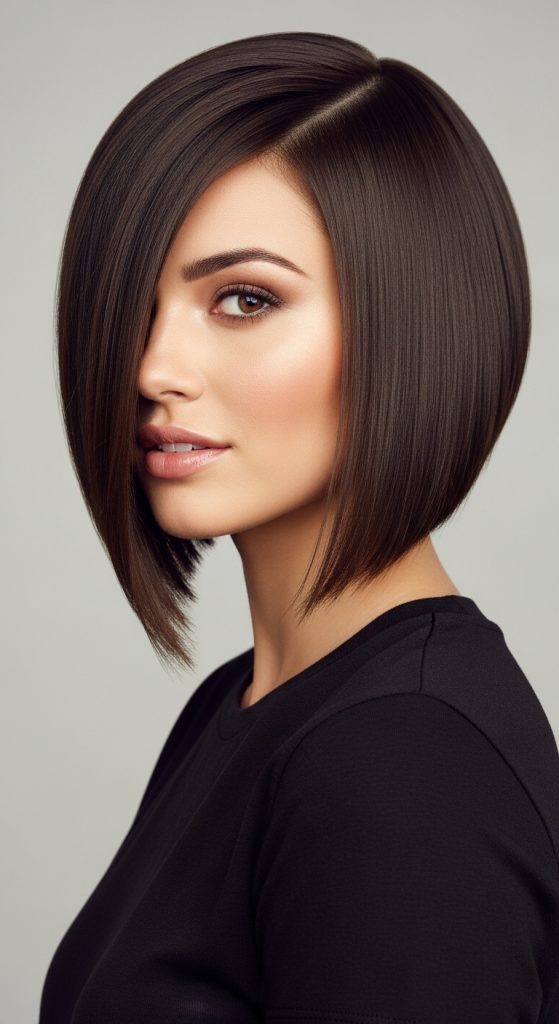
The stylist trims the back first, then gradually lengthens the front sections while maintaining smooth transitions.
Idea 6: Medium Cut with Curtain Bangs
How to Make
Curtain bangs frame the face while creating soft vertical lines. The bangs are parted in the center and blend into the side layers.
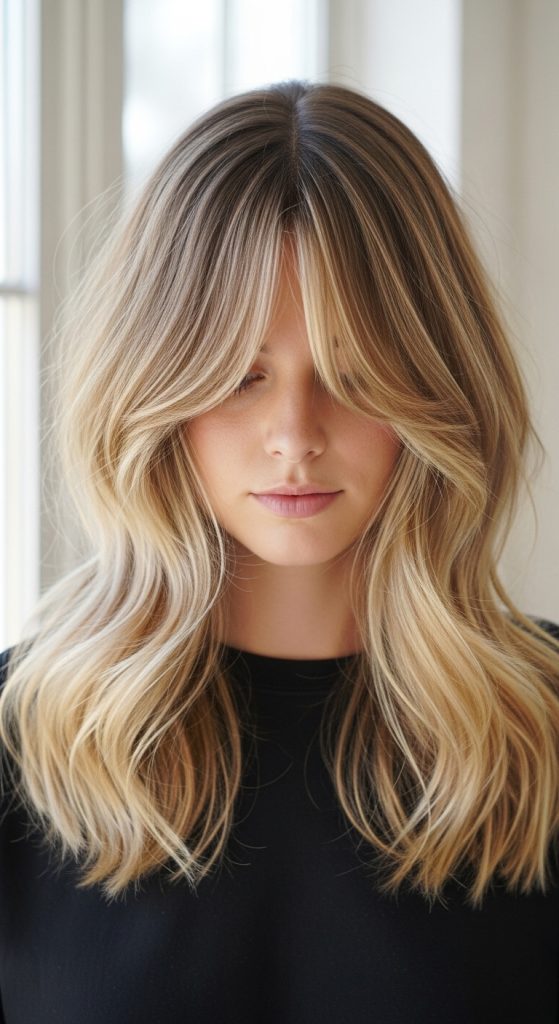
The stylist trims the bangs slightly longer than eyebrow level and blends them into the surrounding layers.
Idea 7: Soft Wavy Medium Cut
Step-by-Step Guide
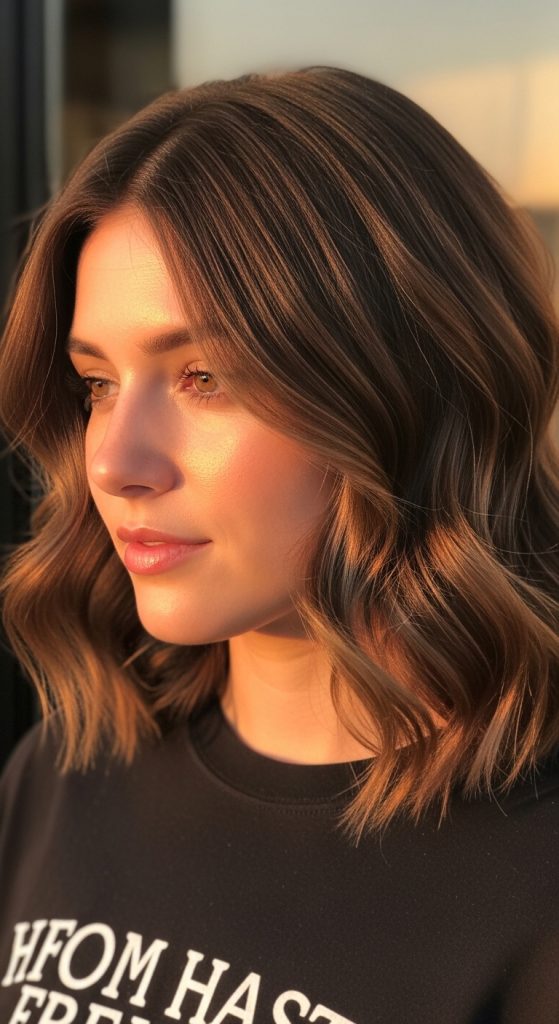
This haircut enhances natural waves while maintaining moderate length. Layers are added to encourage movement without creating bulk near the cheeks.
The stylist trims the baseline length and then shapes the waves using layered techniques.
Idea 8: Textured Lob with Layers
How to Create
The textured lob combines medium length with layered texture. This design creates movement while maintaining a structured silhouette.
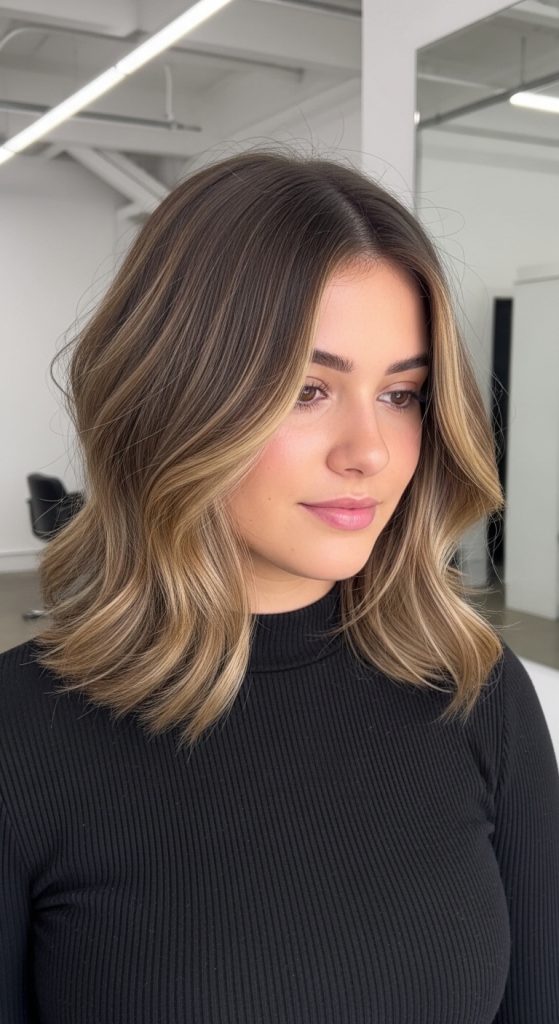
Layers are added gradually through the mid-lengths and ends to enhance texture.
Idea 9: Long Straight Cut with Face Layers
Execution Process
This haircut maintains long hair while adding subtle layers around the face. The layers help frame the face without increasing width.
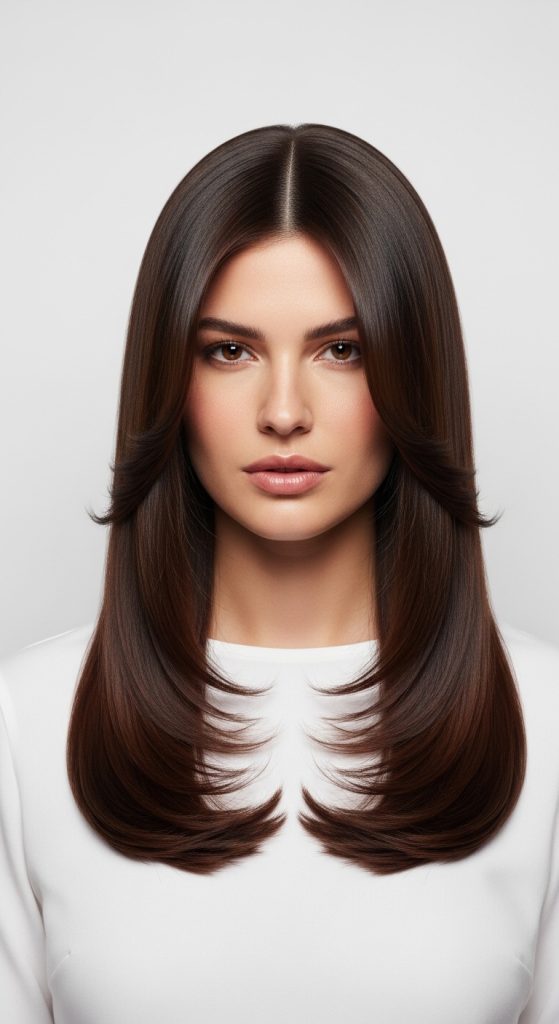
The stylist trims the baseline length and then shapes the front layers carefully.
Idea 10: Medium Voluminous Layered Cut
How to Create
This haircut introduces layers that build height at the crown. The added volume draws attention upward and balances round facial proportions.
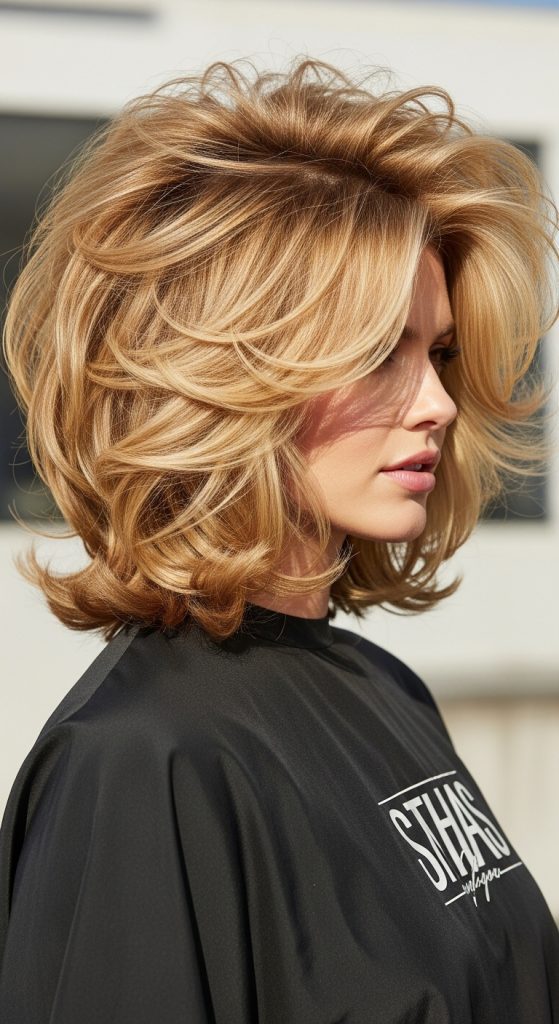
The stylist trims the layers progressively from the crown downward.
Common Beginner Mistakes and How to Avoid Them
One frequent mistake when choosing haircuts for round faces is adding excessive volume around the cheeks. Hairstyles that expand outward at this level can emphasize facial roundness. Instead, volume should be placed near the crown or lower sections of the hair.
Practical Tips for Better Results
Maintaining balanced layering helps create a flattering silhouette. Regular trims ensure the hairstyle retains its intended structure.
Styling, Presentation, or Organization Ideas
Different styling methods can change the appearance of the haircut. Straight finishes highlight structure, while waves introduce movement.
Budget or Time Planning
Medium haircuts typically require maintenance trims every six to eight weeks to preserve their shape.
Creative Expansion and Advanced Inspiration
Advanced variations may include balayage color techniques, layered fringe designs, or subtle highlights that enhance the dimension of hairstyles designed for round face shapes.