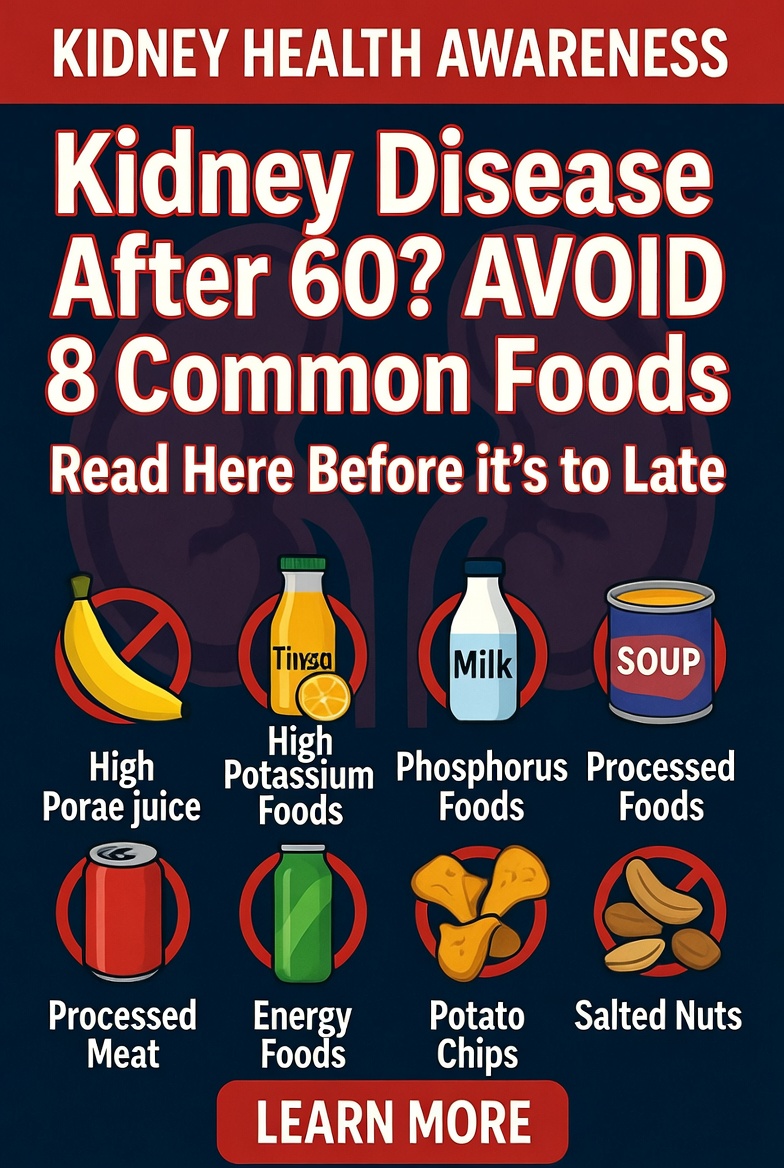
Kidney Disease After 60? AVOID These 8 Common Foods

Kidney disease doesn’t usually start with pain.
It starts quietly—with fatigue, swelling, changes in urination, or labs that are “just a little off.”
After 60, your kidneys naturally become more vulnerable.
But what most people don’t realize is this:
Certain everyday foods quietly overload aging kidneys and speed up kidney decline.
Many of these foods are considered “normal” or even “healthy,” yet they force weakened kidneys to work overtime.
If you’re over 60—or caring for someone who is—this list matters.
Why Kidney Problems Increase After 60
Your kidneys filter waste, balance minerals, regulate blood pressure, and manage fluids. With age:
- Kidney filtration rate naturally declines
- Blood flow to kidneys decreases
- Sensitivity to sodium, potassium, and phosphorus increases
- Chronic conditions (high blood pressure, diabetes) become more common
When kidneys weaken, diet becomes one of the most powerful factors determining how fast damage progresses.
Early Warning Signs of Kidney Stress
Many people miss these signs:
- Persistent fatigue
- Swollen ankles or feet
- Foamy or dark urine
- Frequent nighttime urination
- Muscle cramps
- Poor appetite
- Brain fog
Dietary overload often worsens these symptoms long before advanced disease appears.
Food #1: Processed and Deli Meats
Processed meats are one of the worst offenders for aging kidneys.
Why they’re dangerous
They’re loaded with:
- Sodium
- Phosphorus additives
- Preservatives
- Acid-forming compounds
Phosphorus additives are especially harmful because they are nearly 100% absorbed, unlike natural phosphorus in whole foods.
Kidney impact
- Increased fluid retention
- Elevated blood pressure
- Faster kidney function decline
- Higher cardiovascular risk
Bacon, sausages, hot dogs, deli turkey, and salami should be strictly limited after 60.
Food #2: Excess Salt and Salty Foods
Salt sensitivity increases with age.
High-sodium foods include:
- Canned soups
- Packaged snacks
- Frozen meals
- Sauces and dressings
- Restaurant foods
Why sodium harms kidneys
Too much sodium:
- Raises blood pressure
- Causes fluid retention
- Increases protein leakage into urine
- Forces kidneys to filter harder
High blood pressure is the leading cause of kidney disease progression.
Even “moderate” salt intake may be too much for aging kidneys.
Food #3: Dark-Colored Sodas and Cola Drinks
Many people are shocked by this one.
The hidden danger
Dark sodas contain:
- Phosphoric acid
- Artificial additives
- Sugar or artificial sweeteners
Phosphoric acid disrupts calcium balance and places heavy stress on kidneys already struggling to regulate minerals.
Why this matters after 60
Excess phosphorus:
- Weakens bones
- Hardens blood vessels
- Accelerates kidney damage
Clear sodas aren’t great either—but dark sodas are especially harmful.
Food #4: Too Much Red Meat
Protein is essential—but too much animal protein can be harmful for aging kidneys.
What happens inside the body
Red meat:
- Produces acidic waste
- Increases nitrogen byproducts
- Raises kidney workload
As kidney function declines, clearing these wastes becomes harder.
The risk
High-protein diets may:
- Accelerate kidney decline
- Increase inflammation
- Worsen existing kidney disease
This doesn’t mean eliminating protein—just moderating portions and balancing sources.
Food #5: Dairy Products in Excess
Dairy can be tricky after 60.
Why dairy can stress kidneys
Milk, cheese, and yogurt are high in:
- Phosphorus
- Saturated fat
- Sometimes sodium
Excess phosphorus builds up in the blood when kidneys can’t excrete it efficiently.
Potential effects
- Bone weakening
- Vascular calcification
- Increased kidney strain
Aging kidneys often tolerate smaller portions much better than large daily servings.
Food #6: Packaged and Ultra-Processed Foods
If it comes in a box with a long ingredient list, kidneys don’t like it.
These foods often contain:
- Sodium-based preservatives
- Phosphate additives
- Artificial flavors
- Inflammatory oils
Why additives are the real issue
Unlike natural nutrients, additives:
- Are rapidly absorbed
- Overwhelm kidney filtration
- Don’t provide protective nutrients
Kidneys must work harder to remove chemicals they were never designed to process.
Food #7: Certain High-Potassium Foods (If Kidney Function Is Declining)
Potassium is healthy—until kidneys can’t regulate it properly.
High-potassium foods include:
- Bananas
- Oranges
- Potatoes
- Tomatoes
- Avocados
Why this matters
When kidney function drops, potassium can build up in the blood, leading to:
- Muscle weakness
- Irregular heartbeat
- Dangerous cardiac complications
This doesn’t apply to everyone—but anyone with kidney disease must monitor potassium intake carefully.
Food #8: Sugary Foods and Refined Carbohydrates
Sugar doesn’t damage kidneys directly—but it fuels the top two causes of kidney disease.
The connection
Excess sugar contributes to:
- Diabetes
- Obesity
- Inflammation
- Blood vessel damage
High blood sugar damages the tiny blood vessels inside kidneys, reducing their ability to filter waste.
Hidden sugar sources
- White bread and pasta
- Pastries
- Sweetened drinks
- “Low-fat” snacks
After 60, sugar-related damage accumulates faster.
Why These Foods Are More Dangerous After 60
As you age:
- Kidneys filter less efficiently
- Blood vessels stiffen
- Hormonal regulation weakens
- Recovery from damage slows
Foods that were once “tolerable” can become harmful stressors.
Kidney damage often progresses silently—until it doesn’t.
What to Eat Instead (Kidney-Friendly Choices)
The goal isn’t deprivation—it’s reducing workload and inflammation.
Kidney-supportive foods include:
- Fresh vegetables (lower potassium options if needed)
- Berries and apples
- Olive oil
- Egg whites
- Fish (moderate portions)
- Whole grains in controlled amounts
- Fresh herbs instead of salt
Hydration, balanced minerals, and anti-inflammatory foods help kidneys function longer.
Can Kidney Decline Be Slowed?
In many cases—yes.
Early-stage kidney disease often responds well to:
- Dietary changes
- Blood pressure control
- Blood sugar management
- Reduced inflammation
Food choices alone can significantly slow progression and improve quality of life.
Final Thought
Kidney disease after 60 isn’t always inevitable.
But ignoring dietary stress makes it progress faster.
Your kidneys work nonstop to protect you.
The least we can do is stop feeding them what hurts.
Small changes today can preserve kidney function for years to come.
Because when kidneys struggle—everything else follows.