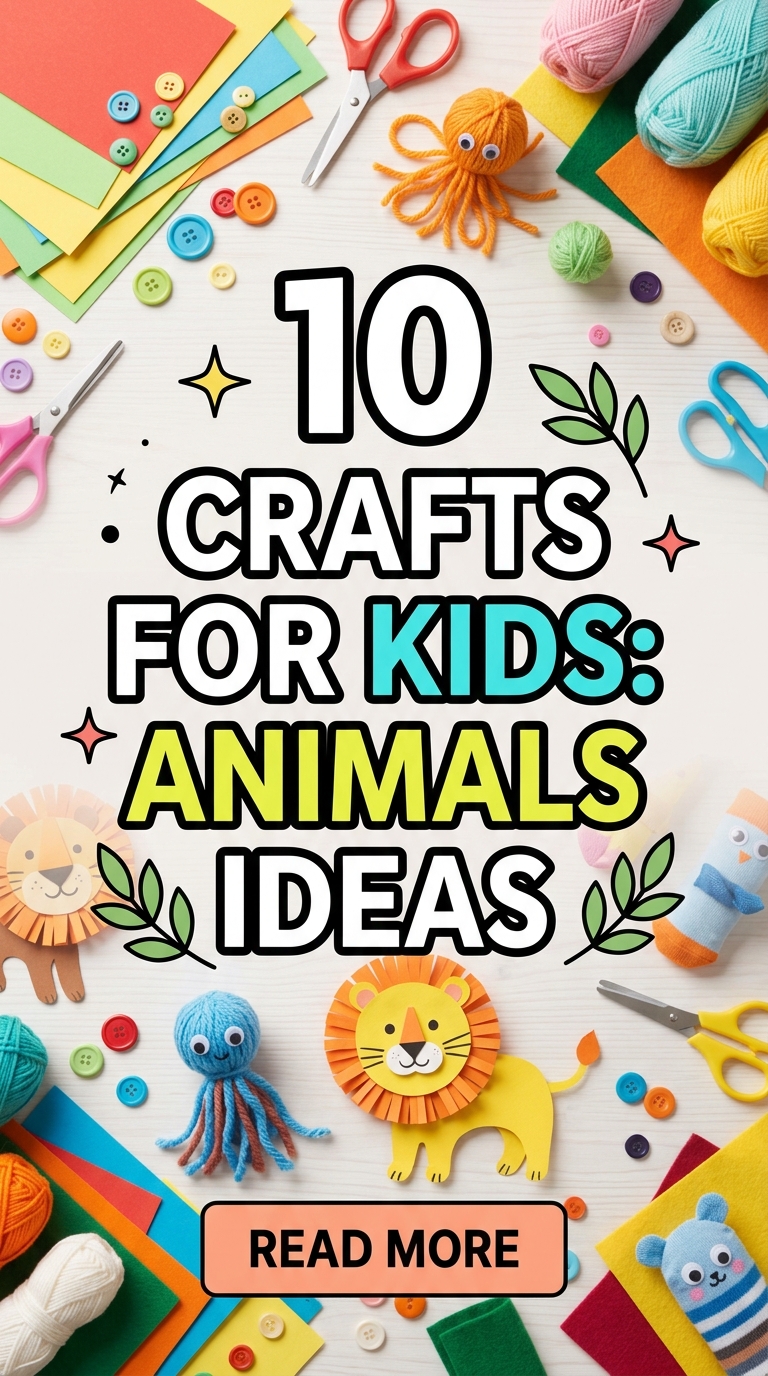
10 Crafts For Kids Animals Ideas
Animal crafts remain one of the most popular categories in Pinterest ideas because they combine creativity, learning, and hands-on activity in a fun and beginner friendly way. Children enjoy creating familiar animals using simple materials, colorful textures, and playful decoration techniques. These projects help improve fine motor skills, imagination, focus, and creative thinking while encouraging children to explore shapes, colors, and natural themes. Animal inspired crafts also work well for classrooms, home activities, seasonal projects, birthday events, and educational play sessions.
This article explains practical and easy project ideas designed specifically for children using accessible DIY materials and organized step by step methods. Readers will learn how to create animal crafts using paper, cardboard, paint, recycled items, fabric, and handmade decoration techniques. Each idea focuses on simple construction methods that are realistic for beginners while still producing aesthetic and creative results. The guide also includes preparation tips, organization strategies, and styling inspiration that help make craft sessions smoother and more enjoyable. These creative ideas support modern learning environments by combining entertainment with practical artistic development. With thoughtful planning and simple materials, animal craft activities can become engaging projects that encourage creativity, coordination, and interactive learning for children of different ages.
Why This Idea Is Trending or Useful
Animal craft projects continue to appear in trending ideas because they combine education with entertainment in a highly accessible format. Pinterest inspiration often highlights children’s crafts that encourage hands-on creativity while using affordable and easy to find materials. Animal themes are especially popular because children naturally connect with familiar creatures such as lions, elephants, birds, fish, and farm animals. These projects create opportunities for storytelling, learning about wildlife, and developing creative confidence through art activities.
The DIY appeal of animal crafts also contributes to their popularity among parents, teachers, and caregivers. Many projects require only basic supplies such as paper, glue, paint, and scissors, making them practical for home decor activities, school projects, or rainy day entertainment. Beginner friendly tutorials help children complete crafts successfully without complicated instructions or expensive tools. Animal crafts also support educational development by improving cutting skills, color recognition, shape organization, and hand coordination. Modern Pinterest ideas often focus on combining playful aesthetics with simple learning activities that keep children engaged for longer periods. These projects remain adaptable for different age groups, themes, and seasonal events. Their flexibility, affordability, and creative value make animal crafts a consistent favorite within Pinterest inspiration and creative project collections.
Materials and Preparation
Preparing materials carefully helps children complete animal craft projects more safely and efficiently. Basic materials commonly used for beginner friendly animal crafts include colored paper, cardboard, glue sticks, child safe scissors, washable paint, markers, googly eyes, craft sticks, cotton balls, pipe cleaners, felt sheets, and recycled containers. These supplies support a wide range of creative ideas while remaining affordable and easy to organize. Recycled materials such as paper rolls, egg cartons, or bottle caps also encourage sustainable DIY crafting habits.
Basic tools should be arranged in an organized workspace before starting the activity. Tables should be covered with protective paper or washable mats to simplify cleanup after painting or gluing. Preparation also includes selecting age appropriate projects that match children’s skill levels. Younger children benefit from simple shapes and large craft pieces, while older children may enjoy layered decoration and more detailed assembly methods. Planning color palettes and organizing materials into small containers improves efficiency and keeps the workspace manageable during the project. Adult supervision remains important when scissors, glue guns, or small decorative pieces are involved. Preparing templates or pre-cut shapes can also help simplify complicated steps for beginners. Organized preparation creates smoother crafting sessions while allowing children to focus more fully on creativity and hands-on learning.
Idea 1: Paper Plate Lion Craft
How to Create
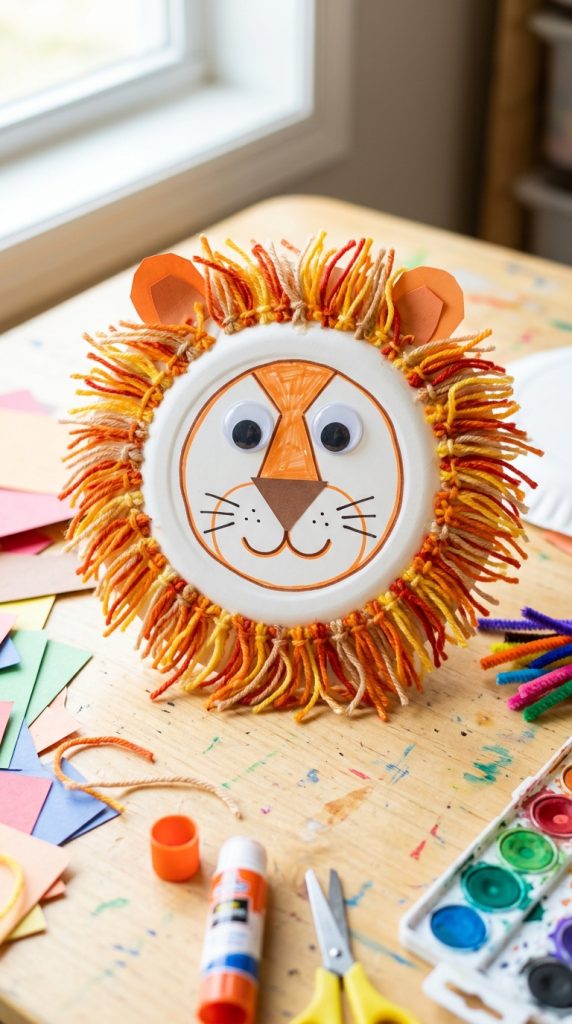
A paper plate lion craft creates a colorful and engaging animal project that helps children explore texture, shape, and creative decoration. This craft remains highly popular in Pinterest ideas because it uses simple materials while producing playful and recognizable results. The lion design focuses on creating a large mane around the paper plate face, allowing children to experiment with colors, cutting patterns, and layered decoration. This project also supports storytelling activities about jungle animals and wildlife themes.
The step by step process begins by painting or coloring a paper plate with yellow or orange tones to create the lion’s face. Strips of colored paper or yarn are attached around the outer edge to form the mane. Children can cut the strips into different shapes or curl them slightly to create more texture and movement. Googly eyes, a paper nose, and drawn whiskers complete the facial features. Additional handmade decoration elements such as glitter paper or textured fabrics can add visual variety while maintaining beginner friendly simplicity. This DIY tutorial works especially well for preschool and elementary age children because the shapes remain large and easy to handle. Organizing materials beforehand helps children focus on assembly and decoration while reducing workspace clutter during the creative project.
Idea 2: Cardboard Tube Elephant
Step-by-Step Guide
A cardboard tube elephant craft transforms recycled paper rolls into playful animal figures suitable for educational and decorative activities. Pinterest inspiration frequently highlights recycled animal crafts because they combine sustainability with creative hands-on learning. The elephant design allows children to explore shape building while learning about wildlife animals through practical DIY activities. This easy project also supports fine motor skill development through cutting, gluing, and painting.
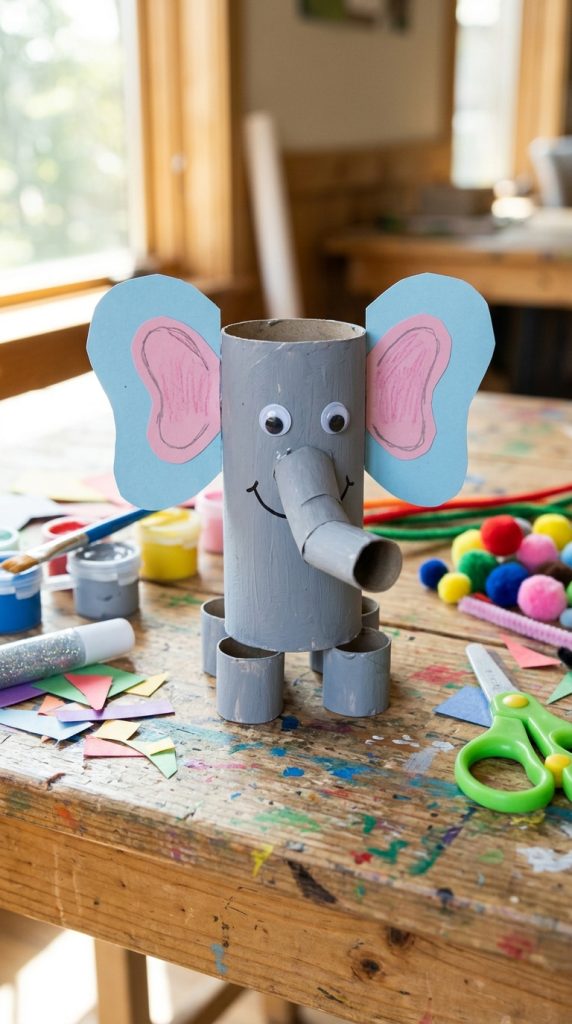
The setup method begins by painting a cardboard tube gray or covering it with gray construction paper. Large paper ears are attached to the sides using glue or tape, while a rolled strip of paper forms the elephant trunk. Pipe cleaners or paper strips can create the tail and decorative details. Children may also add googly eyes or draw facial expressions with markers to personalize the craft further. Recycled bottle caps or folded cardboard pieces can serve as stable feet for the elephant figure. Organizing all materials before beginning helps simplify the process for younger children and improves project flow. This beginner friendly tutorial uses inexpensive materials while encouraging imaginative play and creative storytelling after the craft is completed. The final result creates a playful and recognizable animal decoration suitable for classrooms or home craft displays.
Idea 3: Handprint Peacock Art
How to Make
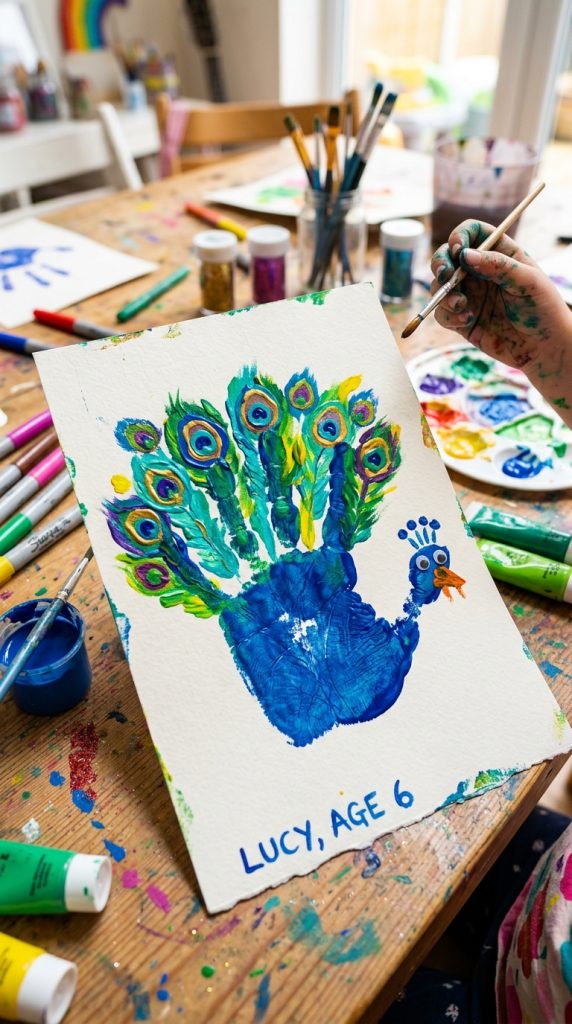
A handprint peacock craft combines painting and animal design to create colorful artwork that children can personalize easily. This project appears frequently in Pinterest ideas because it combines sensory creativity with bright decorative patterns. Handprint crafts also create memorable keepsakes while encouraging children to explore color mixing, symmetry, and texture. The peacock theme works especially well because the large tail feathers allow endless decoration possibilities using paint, paper, and glitter accents.
The practical process begins by painting a child’s hand using washable paints in bright blue, green, and purple shades. Multiple handprints are stamped onto paper in a fan shape to create the peacock tail feathers. After the paint dries, a paper or painted peacock body is added at the center. Decorative details such as sequins, markers, or paper circles can enhance the feather patterns while maintaining beginner friendly simplicity. Children may also add glitter glue or stickers to increase texture and visual variety. Organizing paints and wipes beforehand helps keep the workspace manageable during the activity. This easy project encourages artistic expression while helping children develop coordination and creative confidence. The completed artwork functions as both a fun craft activity and an aesthetic handmade decoration suitable for display at home or school.
Idea 4: Egg Carton Turtle Craft
Execution Process
An egg carton turtle craft uses recycled packaging materials to create playful animal figures with textured shells and simple assembly methods. Pinterest inspiration often features egg carton crafts because they encourage sustainable crafting while using inexpensive household materials. The turtle design works especially well for children because the rounded egg carton shape naturally resembles a turtle shell, simplifying the construction process significantly.
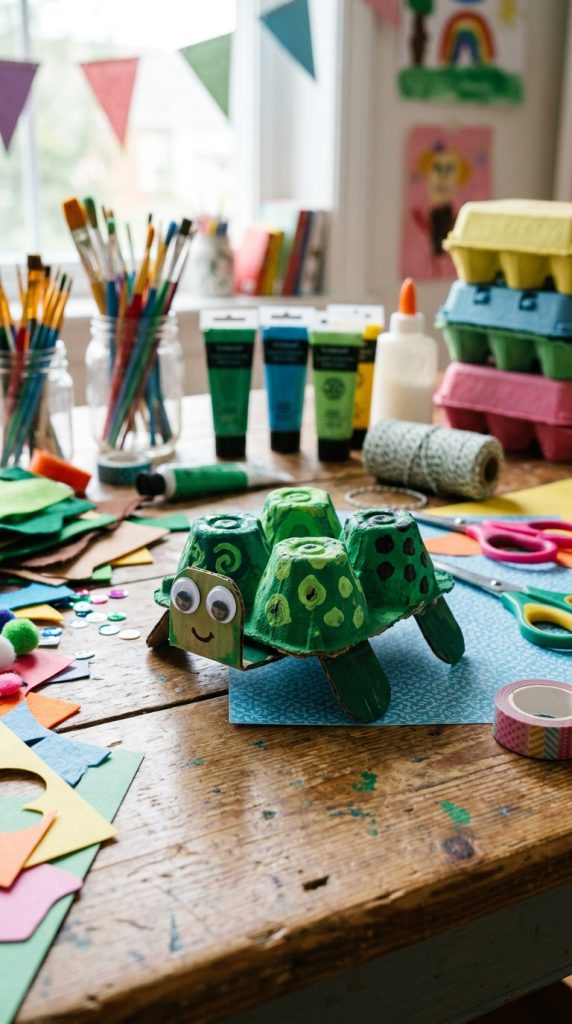
The execution process begins by cutting individual egg carton sections and painting them green or other turtle inspired colors. Once dry, children can add decorative shell patterns using markers, paint dots, or stickers. Paper legs, a tail, and a turtle head are attached underneath the shell using glue. Googly eyes or drawn facial features complete the animal design. Pipe cleaners may also be used to create flexible legs or textured details. Organizing paint stations and drying areas beforehand helps maintain smooth project flow during group craft sessions. This beginner friendly DIY tutorial supports creativity while teaching children how recycled materials can become artistic projects. The final turtle crafts can also be used for storytelling activities, classroom displays, or playful home decor arrangements that encourage continued imaginative learning.
Idea 5: Popsicle Stick Zebra
How to Create
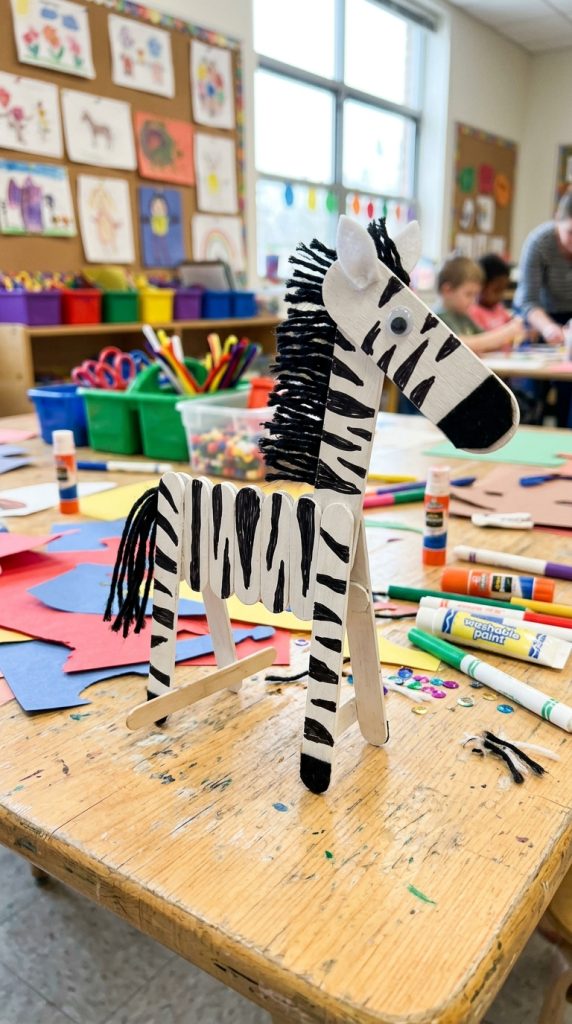
A popsicle stick zebra craft creates a structured and playful animal design using simple assembly techniques suitable for children. Pinterest ideas frequently include craft stick projects because they are affordable, accessible, and highly adaptable for creative themes. The zebra design introduces children to striped patterns and black and white contrast while supporting hands-on construction and decoration skills. This project also encourages careful organization because multiple pieces must be aligned correctly during assembly.
The setup process begins by arranging craft sticks side by side and gluing them together to create the zebra body base. Once the structure dries, children paint alternating black and white stripes across the surface to create the zebra pattern. Paper ears, legs, and tails are attached afterward using glue or tape. Googly eyes and drawn facial features complete the design while allowing children to personalize their craft. Additional decoration such as fabric scraps or textured paper can add visual interest without complicating the project. Organizing paint supplies and drying stations beforehand helps children work more comfortably and prevents smudging during the process. This beginner friendly tutorial supports coordination, pattern recognition, and creative confidence through a practical and engaging animal craft activity.
Idea 6: Cotton Ball Sheep Craft
Setup Method
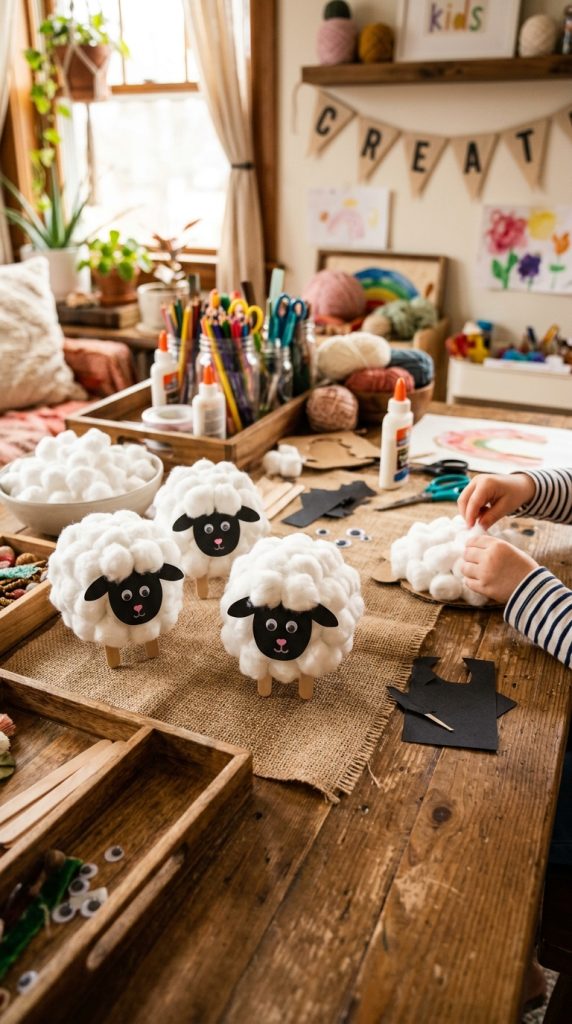
A cotton ball sheep craft creates a soft textured animal project that introduces children to layering and sensory materials. This craft remains highly visible across Pinterest inspiration boards because it combines simple shapes with playful tactile elements. Cotton balls create realistic wool textures while keeping the project beginner friendly and visually appealing for younger children. The sheep theme also supports farm animal learning activities and seasonal classroom decoration ideas.
The setup method begins by cutting a sheep body shape from cardboard or thick paper. Children glue cotton balls across the body to create fluffy wool coverage while leaving space for the face and legs. Black construction paper works well for the sheep head, ears, and legs because it contrasts clearly against the white cotton texture. Googly eyes or drawn facial expressions complete the animal appearance. Small decorative additions such as grass backgrounds or paper fences can expand the craft into a larger creative project scene. Organizing glue, cotton balls, and paper shapes beforehand improves efficiency and reduces mess during the activity. This easy project helps children develop hand coordination and material handling skills while creating an aesthetic handmade decoration suitable for classroom walls or home displays.
Idea 7: Clothespin Butterfly Craft
How to Make
A clothespin butterfly craft combines painting, folding, and decorative assembly into a colorful insect inspired animal project. Pinterest ideas often feature butterfly crafts because they encourage bright color combinations and creative personalization while remaining highly beginner friendly. The butterfly design allows children to experiment with symmetry, wing shapes, and decorative patterns using simple DIY materials.
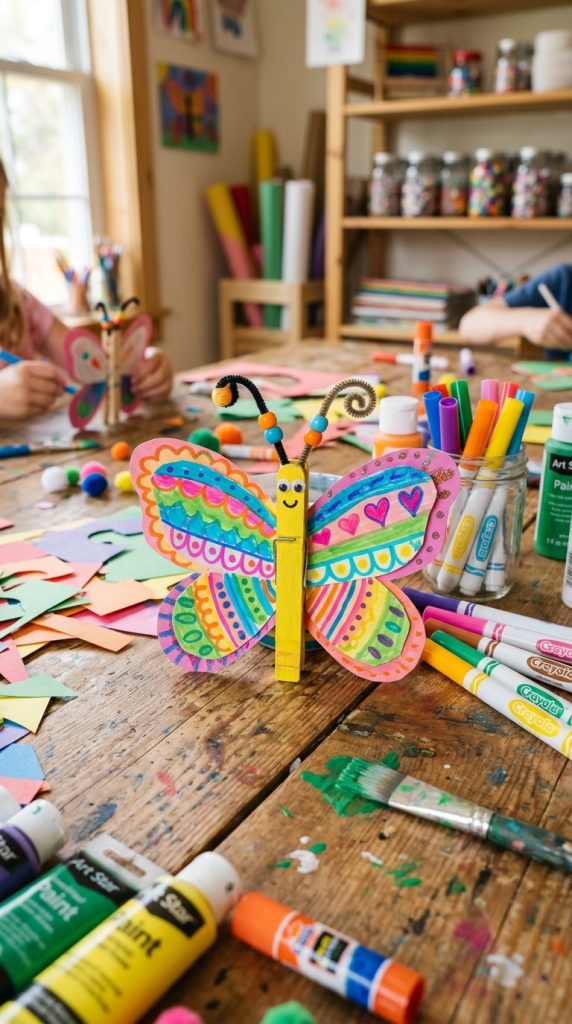
The practical process begins by painting wooden clothespins in bright colors or wrapping them with decorative paper. Folded paper or coffee filters form the butterfly wings and can be colored using markers, watercolor paint, or crayons. Once dry, the wings are attached securely to the clothespin body using glue. Pipe cleaners twisted into spirals create butterfly antennae and add playful movement to the design. Children may also decorate the wings with stickers, glitter, or painted patterns to personalize their butterflies further. Organizing coloring materials and drying areas before beginning helps simplify the project for group activities. This beginner friendly tutorial encourages imaginative creativity while helping children practice folding, gluing, and color coordination skills. The completed butterflies can also function as playful room decoration or seasonal spring craft displays.
Idea 8: Paper Bag Frog Puppet
Step-by-Step Guide
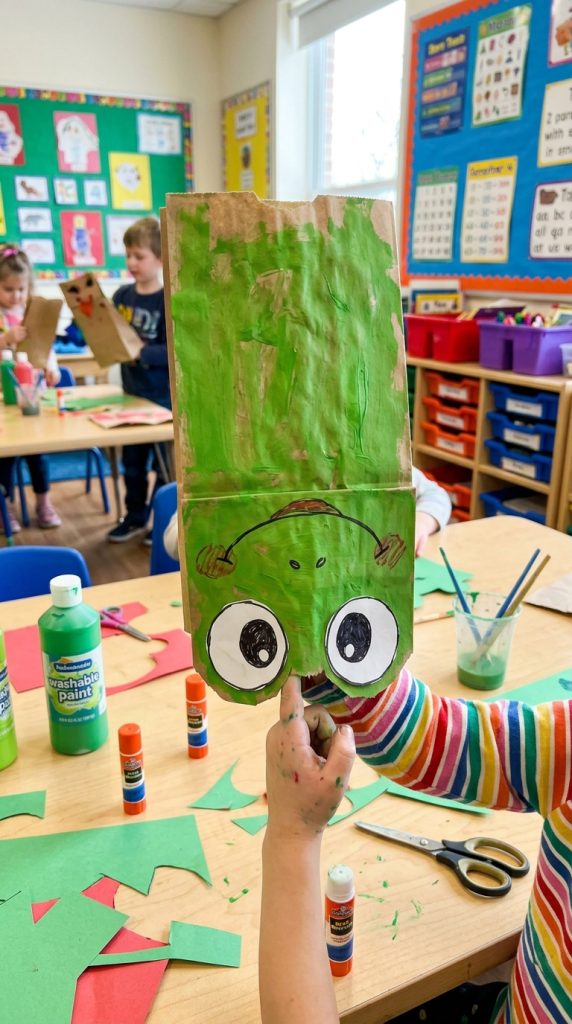
A paper bag frog puppet transforms simple lunch bags into interactive animal crafts that support storytelling and imaginative play. Pinterest inspiration frequently highlights puppet projects because they combine crafting with performance based activities that keep children engaged for longer periods. The frog theme works especially well because large eyes, wide mouths, and green colors create expressive and recognizable animal characters.
The installation process begins by covering a paper bag with green construction paper or paint. Large paper eyes are attached near the top flap, which functions as the frog’s moving mouth during puppet play. Children can add paper legs, spotted patterns, or long paper tongues for additional decorative detail. Markers and crayons help personalize facial expressions and body decoration. Pipe cleaners may also be used to create flexible arms or textured features. Organizing templates and pre-cut shapes beforehand helps younger children complete the project more easily. This beginner friendly DIY tutorial combines art with interactive storytelling, helping children develop communication and creative thinking skills while crafting. The finished frog puppets can be used for classroom activities, pretend play sessions, or creative performance games at home.
Idea 9: Painted Rock Ladybugs
Execution Process
Painted rock ladybug crafts create simple and durable animal decorations using natural materials and bright color patterns. Pinterest ideas often feature painted stone crafts because they combine outdoor exploration with artistic creativity. Children enjoy selecting rocks and transforming them into recognizable insects through painting and decorative details. The ladybug design remains especially beginner friendly because it uses simple shapes and bold color contrast.
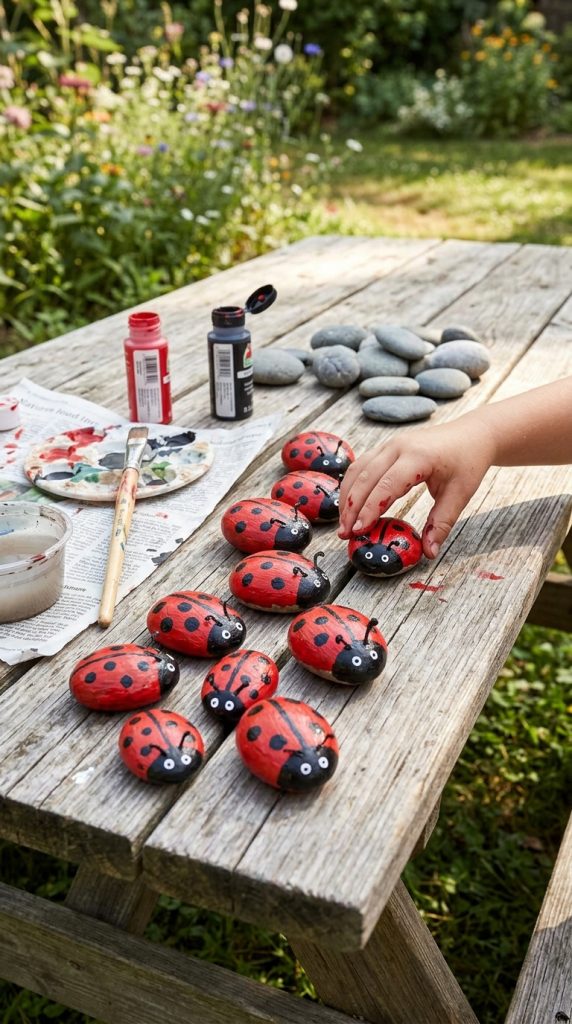
The execution process begins by washing and drying smooth rocks before painting them with red acrylic or washable paint. Once dry, children add black spots, heads, and antennae using brushes or paint markers. White dots or googly eyes may also be added to create playful facial expressions. Clear protective coating can improve durability if the rocks will be used outdoors for garden decoration or play activities. Organizing paint trays and drying spaces beforehand helps simplify cleanup and improves project organization. This easy project encourages observation of nature while helping children practice brush control and color placement. The completed ladybug rocks can function as aesthetic handmade decoration for gardens, classroom displays, or indoor creative project arrangements.
Idea 10: Felt Fish Aquarium Craft
How to Create
A felt fish aquarium craft creates a colorful underwater scene using soft materials and layered decoration techniques. Pinterest inspiration frequently features felt animal crafts because they combine texture, shape cutting, and imaginative assembly into visually engaging projects. Fish designs allow children to experiment with bright colors, ocean themes, and creative pattern combinations while building basic crafting skills.
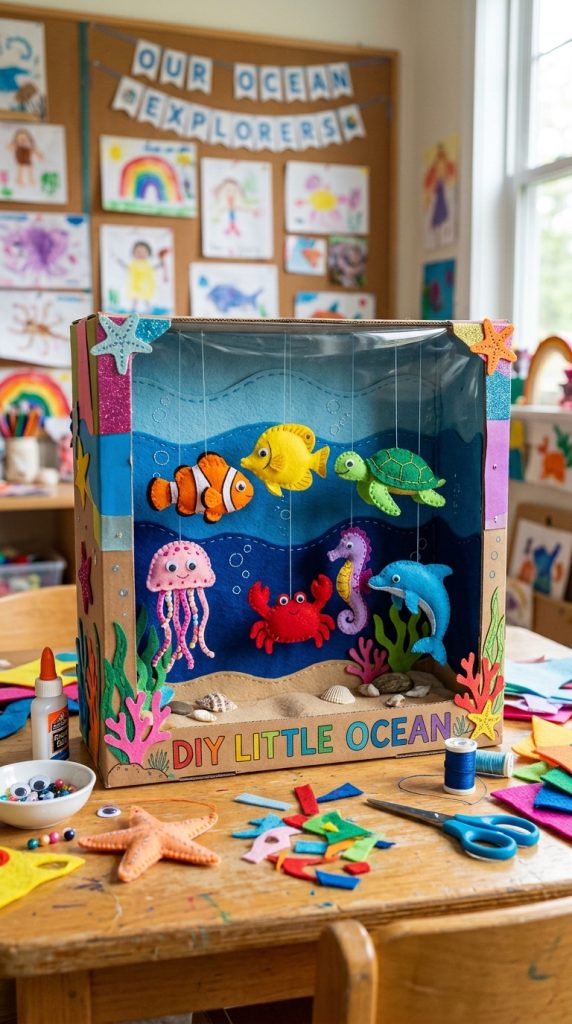
The practical setup begins by cutting fish shapes from colorful felt sheets using simple templates. Children decorate the fish using smaller felt pieces, buttons, or stitched patterns to create scales, fins, and facial details. A cardboard box or large paper background can become the aquarium scene filled with seaweed, bubbles, and underwater decoration elements. Glue or child safe stitching methods secure the felt pieces together depending on the children’s age and skill level. Organizing templates, felt colors, and decorative materials before beginning helps maintain smooth project flow. This beginner friendly DIY tutorial encourages imaginative storytelling while helping children practice cutting, layering, and organization skills. The completed aquarium scene creates an aesthetic handmade display that can remain as room decoration or interactive play material after the activity ends.
Common Beginner Mistakes and How to Avoid Them
One common mistake in children’s animal crafts involves choosing projects that are too advanced for the child’s age or skill level. Complex cutting patterns or detailed assembly methods may reduce enjoyment and create frustration. Beginner friendly designs with larger shapes and simple steps improve confidence and keep children engaged. Another frequent issue involves poor workspace organization. Unsorted materials and crowded tables often interrupt project flow and create unnecessary mess during crafting sessions.
Using too much glue or paint is another common challenge that affects drying time and project stability. Demonstrating small amounts and organized application methods helps children work more efficiently. Some projects also become difficult when materials are not prepared beforehand. Pre-cut templates and organized supply containers improve accessibility and simplify instructions for younger children. Lack of supervision during activities involving scissors or small decorative items may also create safety concerns. Adult guidance helps maintain safer and more organized creative sessions. Encouraging children to focus on creativity rather than perfection improves confidence and enjoyment throughout the project. Careful planning, realistic project selection, and organized preparation help create smoother crafting experiences while supporting positive artistic development.
Practical Tips for Better Results
Using washable paints and child safe materials improves safety and simplifies cleanup during craft activities. Organizing supplies into small containers also helps children locate materials easily and maintain cleaner workspaces. Covering tables with protective paper or reusable mats prevents damage and reduces cleanup time after painting or gluing. Beginner friendly tutorials work best when instructions are explained visually and broken into smaller step by step sections.
Encouraging children to personalize colors, patterns, and decoration details improves creative confidence and keeps projects more engaging. Simple background music or themed storytelling can also improve focus and create more enjoyable crafting environments. Drying stations should be prepared before beginning projects that involve paint or glue to prevent smudging and damage. Labeling materials and separating tools by category improves organization during group activities. Combining recycled materials with traditional craft supplies supports sustainable creative habits while reducing costs. These practical planning methods help children complete projects more comfortably while improving artistic results and maintaining organized workspaces throughout the crafting session.
Styling, Presentation, or Organization Ideas
Displaying completed animal crafts creatively helps children feel proud of their work while improving home decor or classroom presentation. Wall displays arranged by animal themes, colors, or habitats create organized and visually engaging craft collections. Hanging strings, cork boards, or framed paper backgrounds help present lightweight crafts attractively while preserving them longer. Tabletop arrangements using cardboard scenery or handmade decoration elements can also create interactive display environments.
Storage organization improves future crafting sessions and helps maintain cleaner creative spaces. Clear containers labeled by material type simplify preparation and allow children to participate more independently in craft selection. Rotating seasonal craft displays throughout the year keeps rooms visually fresh while encouraging ongoing creativity. Handmade banners, painted signs, or themed backgrounds also improve presentation quality during classroom events or family activities. Using coordinated color palettes across multiple projects creates stronger aesthetic balance within larger displays. These organization and styling techniques transform simple craft activities into visually appealing creative projects that continue supporting learning and artistic inspiration even after the crafting session ends.
Budget or Time Planning
Animal craft projects remain affordable because many designs use recycled or inexpensive household materials. Cardboard tubes, paper plates, egg cartons, and scrap paper provide practical foundations for numerous DIY projects while reducing waste. Purchasing versatile supplies such as paint, glue, markers, and colored paper in bulk also improves efficiency for repeated crafting sessions. Creating a material checklist before beginning helps reduce unnecessary purchases and improves organization.
Time planning becomes easier when projects are divided into smaller stages such as painting, drying, cutting, and assembly. Younger children benefit from shorter activities with limited steps, while older children may enjoy more detailed decoration work. Preparing templates and organizing materials beforehand reduces delays and helps maintain smoother project flow. Simple crafts can often be completed within one session, while larger creative projects may require separate drying and decoration periods. Grouping similar materials together improves efficiency and simplifies cleanup afterward. These planning strategies help parents, teachers, and caregivers manage craft activities more effectively while maintaining enjoyable and organized creative environments.
Creative Expansion and Advanced Inspiration
After completing basic animal crafts, children can expand projects into larger creative themes that encourage storytelling and imaginative play. Jungle scenes, underwater worlds, farm displays, or safari environments allow multiple crafts to connect within one organized creative project. Additional handmade decoration elements such as trees, grass, clouds, or background scenery improve visual depth and create more interactive displays.
Advanced inspiration ideas may include moving craft parts, layered textures, or mixed material techniques using fabric, recycled plastics, or clay. Children can also create puppet shows, educational posters, or miniature habitats that combine learning with artistic creativity. Seasonal variations such as winter penguins, spring butterflies, or autumn foxes keep projects visually fresh throughout the year. Collaborative classroom murals or family craft displays encourage teamwork and communication while supporting artistic development. Combining painting, storytelling, and decoration techniques creates richer creative experiences that extend beyond simple crafting sessions. These advanced inspiration ideas help transform beginner friendly animal crafts into highly engaging educational and artistic activities that continue supporting creativity and learning over time.