10 Minute Crafts For Kids Ideas

Quick craft activities help children stay creative, active, and engaged without requiring long preparation times or complicated materials. Many parents, teachers, and caregivers search for simple Pinterest ideas that children can complete within a short period while still encouraging imagination and hands-on learning. Ten minute crafts are especially useful for after-school activities, classroom breaks, rainy afternoons, birthday parties, and weekend creative sessions. These projects combine fun with practical skill development by encouraging children to explore colors, textures, shapes, and handmade decoration techniques using accessible DIY supplies.
This article explains beginner friendly craft ideas designed specifically for children using fast and practical step by step methods. Readers will learn how to create colorful projects using paper, recycled materials, paint, glue, and simple decorative supplies. Each idea focuses on realistic and easy project techniques that fit within limited time while still producing creative and aesthetic results. The guide also includes preparation strategies, organization tips, and practical inspiration to simplify the crafting process. These creative ideas support educational development by improving coordination, concentration, and artistic confidence. With organized planning and basic materials, children can complete enjoyable craft activities quickly while still experiencing the satisfaction of making handmade projects that encourage creativity and playful learning.
Why This Idea Is Trending or Useful
Ten minute crafts continue to appear in trending ideas because they provide quick entertainment and creative engagement without requiring large time commitments. Pinterest inspiration frequently highlights short DIY projects that fit into busy family schedules while still supporting learning and artistic development. Fast crafts are especially practical for younger children because shorter activities help maintain focus and reduce frustration during complicated projects. These quick activities also work well for classrooms, camps, and group events where organized timing is important.
The accessibility of ten minute crafts also contributes to their popularity. Most projects use affordable materials such as paper, cardboard, paint, glue, and recycled household items, making them beginner friendly and practical for different budgets. Parents and teachers often prefer creative projects that require minimal preparation while still encouraging imagination and hands-on learning. Short craft sessions also support flexible planning because they can be completed during breaks, transitions, or free play periods. Many modern Pinterest ideas focus on balancing education with entertainment through simple and engaging activities that children can complete independently or with light supervision. The combination of convenience, creativity, affordability, and quick results makes ten minute crafts highly popular within Pinterest inspiration and DIY creative project collections.
Materials and Preparation
Preparing materials before starting helps children complete crafts more efficiently while keeping the workspace organized. Common supplies used for quick craft activities include colored paper, glue sticks, washable markers, scissors, paint, stickers, craft sticks, pipe cleaners, cotton balls, googly eyes, cardboard scraps, and recycled containers. These materials support a wide range of creative ideas while remaining inexpensive and easy to store. Recycled items such as paper rolls, egg cartons, or bottle caps also encourage sustainable crafting habits.
Basic tools should be arranged in small containers before beginning the activity. Tables should be covered with protective paper or washable mats to simplify cleanup after painting or gluing. Planning should focus on selecting beginner friendly projects that match the children’s age and attention span. Pre-cutting complicated shapes or organizing materials into labeled trays can reduce delays during the craft session. Choosing projects with limited drying time also helps maintain the ten minute structure effectively. Adult supervision may be necessary when scissors or small decorative pieces are involved. Preparing all materials before children begin crafting allows them to focus fully on creativity instead of searching for supplies. Organized preparation supports smoother activities, reduces frustration, and creates more enjoyable crafting experiences for children and caregivers alike.
Idea 1: Paper Fan Fish Craft
How to Create
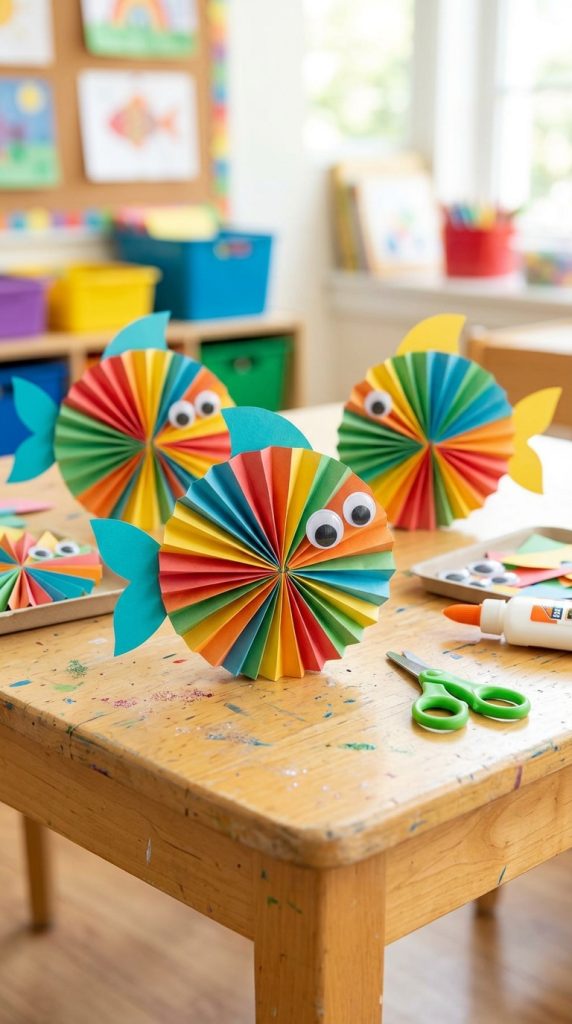
A paper fan fish craft creates a colorful underwater themed project that children can complete quickly using simple folding techniques. This craft remains popular in Pinterest ideas because it combines movement, texture, and bright decoration while requiring minimal materials. The folded paper fan creates the fish body, giving the finished craft a playful three dimensional appearance. Children also enjoy customizing the fish using different colors, patterns, and decorative details.
The step by step process begins by folding a rectangular sheet of colored paper back and forth into an accordion shape. Once folded, the paper is bent slightly and secured at the center using glue or tape to create the fish body shape. Paper fins and tails are attached afterward using contrasting colors to improve visual interest. Googly eyes, stickers, or hand drawn scales complete the design while encouraging creativity and personalization. Small pieces of string can also be attached so the fish can hang as room decoration. Organizing pre-cut paper shapes and decorative supplies beforehand helps maintain quick project timing. This beginner friendly DIY tutorial improves fine motor skills while encouraging children to experiment with color combinations and simple construction techniques through an easy and enjoyable creative project.
Idea 2: Popsicle Stick Photo Frame
Step-by-Step Guide

A popsicle stick photo frame craft creates a practical handmade decoration that children can personalize using paint and simple accessories. Pinterest inspiration frequently highlights photo frame projects because they combine creativity with sentimental value while remaining beginner friendly and fast to complete. Craft stick frames also encourage children to experiment with color coordination and decorative layering techniques.
The setup method begins by arranging four craft sticks into a square or rectangle shape and securing the corners with glue. Once the frame structure is stable, children paint the surface using bright colors or patterned designs. Decorative materials such as buttons, stickers, glitter, or foam shapes can be added to personalize the frame further. A small printed photo or drawing is attached behind the frame after the paint dries. Magnets or loops of string may also be added for wall display or refrigerator decoration. Organizing paint supplies and decorative materials before beginning helps simplify the process and maintain efficient timing. This easy project encourages creativity while producing a functional keepsake that children can display proudly at home or school. The completed frame combines practical use with aesthetic handmade decoration in a quick and engaging craft activity.
Idea 3: Paper Plate Rainbow
How to Make
A paper plate rainbow craft creates a bright and cheerful decoration using simple cutting and coloring methods. This project appears frequently in Pinterest ideas because it combines bold colors with beginner friendly assembly techniques suitable for younger children. Rainbow crafts also encourage children to learn color order while exploring creative decoration through painting, drawing, and textured materials.
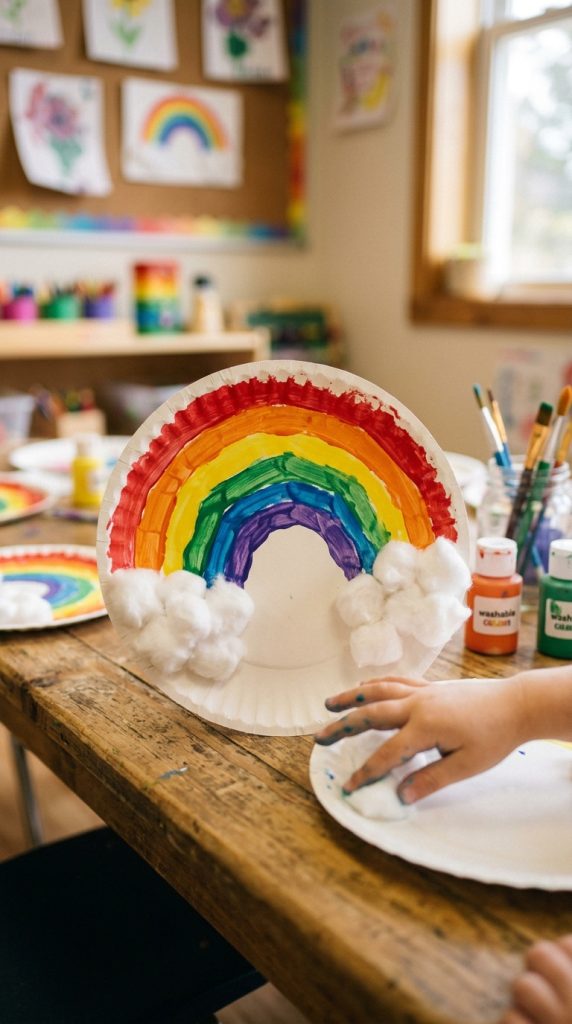
The practical process begins by cutting a paper plate in half to create the rainbow arch shape. Children paint or color curved rainbow stripes across the surface using markers, crayons, or washable paint. Cotton balls glued along the bottom edges create fluffy cloud details that improve texture and visual contrast. Additional decorative elements such as glitter glue, stickers, or paper stars may also be added to personalize the rainbow further. Organizing coloring tools and cotton balls before starting helps maintain smooth project flow and keeps the activity within a short timeframe. This beginner friendly DIY tutorial encourages color recognition, hand coordination, and artistic expression while creating an aesthetic handmade decoration suitable for classrooms, bedrooms, or seasonal displays. The final project remains lightweight, colorful, and easy for children to complete independently.
Idea 4: Toilet Paper Roll Rocket
Execution Process
A toilet paper roll rocket craft transforms recycled cardboard tubes into imaginative space themed projects suitable for quick crafting sessions. Pinterest inspiration often highlights recycled DIY crafts because they encourage creativity while reusing common household materials. The rocket design introduces children to simple construction methods while supporting imaginative play related to space exploration and adventure themes.
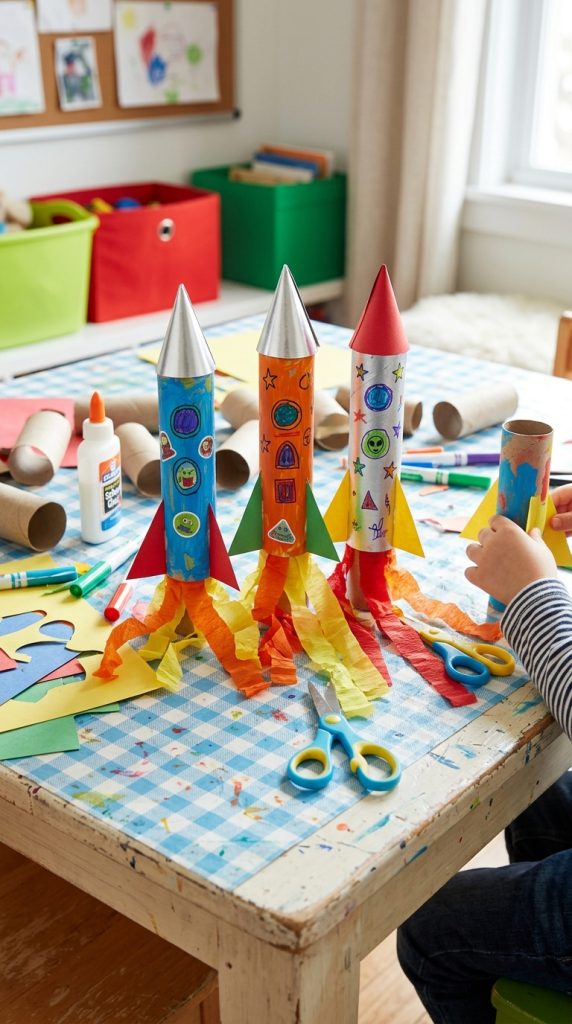
The execution process begins by covering a cardboard tube with colored paper or paint to create the rocket body. A paper cone attached at the top forms the rocket tip, while small triangular fins are glued along the sides or bottom for stability. Tissue paper strips or ribbons attached underneath create the appearance of flames launching from the rocket engine. Children can decorate the surface further using stickers, markers, or drawn windows and stars. Organizing pre-cut paper shapes beforehand helps simplify the activity for younger children and maintains efficient timing. This beginner friendly craft encourages imagination, coordination, and creative storytelling while using inexpensive recycled materials. The completed rockets can also become interactive toys for pretend play after the crafting activity ends, making the project both decorative and entertaining.
Idea 5: Handprint Flower Art
How to Create
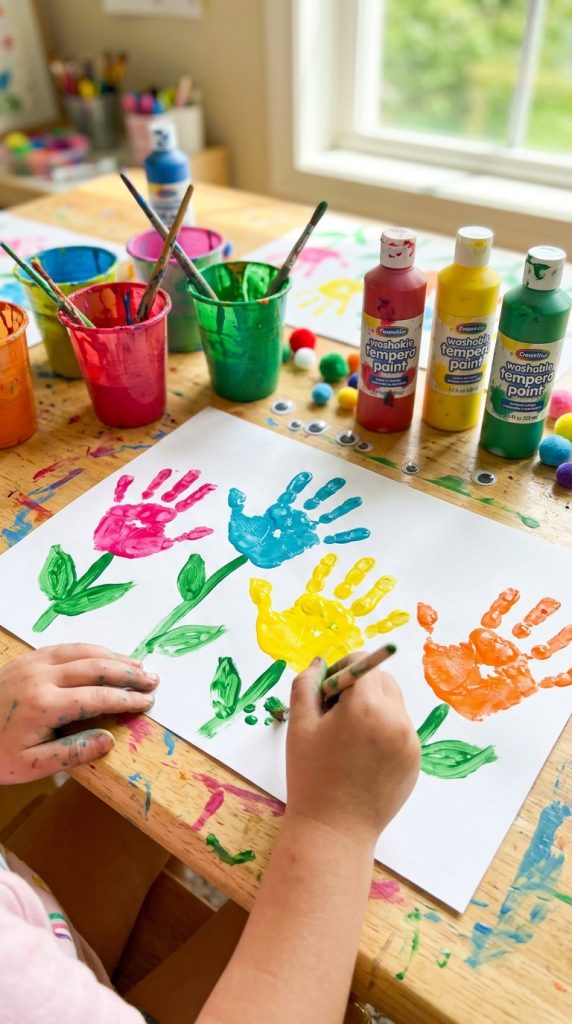
A handprint flower craft creates colorful artwork that combines painting with simple floral design techniques. Pinterest ideas frequently feature handprint crafts because they create memorable keepsakes while encouraging children to explore texture, color, and creative expression. Flower themes also work well for spring decoration, classroom displays, or handmade gifts because they remain visually cheerful and beginner friendly.
The setup process begins by painting a child’s hand using washable paint in bright floral colors such as pink, yellow, purple, or red. The handprint is pressed onto paper multiple times around a center circle to create flower petals. Green paint or markers are then used to draw stems and leaves beneath the flower shapes. Additional decorative details such as butterflies, grass, or glitter accents may also be added to personalize the artwork further. Organizing wipes, paint trays, and drying areas before starting helps simplify cleanup and maintain smooth activity flow. This easy project supports fine motor development and color recognition while encouraging creative experimentation. The finished artwork functions as aesthetic home decor and meaningful handmade decoration suitable for gifts, classroom walls, or seasonal displays.
Idea 6: Clothespin Dragonflies
Setup Method
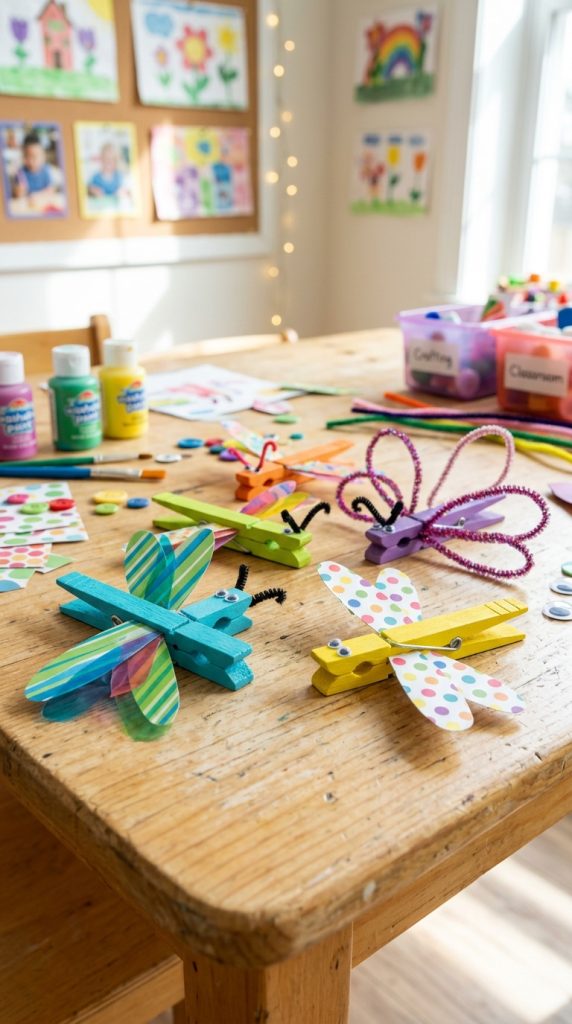
A clothespin dragonfly craft combines painting and assembly into a colorful insect themed project that children can complete quickly. Pinterest inspiration often highlights dragonfly crafts because they allow bright decorative creativity while remaining highly beginner friendly. Clothespins provide a simple structure for the insect body, while lightweight wings create movement and visual interest within the finished design.
The setup method begins by painting wooden clothespins using bright colors or patterned designs. Transparent paper, coffee filters, or lightweight craft foam can be cut into wing shapes and attached to the sides using glue. Pipe cleaners twisted into antennae improve texture and add playful decorative detail. Children may also decorate the wings with markers, stickers, or glitter to personalize their dragonflies further. Organizing wing templates and drying stations beforehand improves efficiency during group crafting sessions. This beginner friendly DIY tutorial helps children practice cutting, folding, and assembly techniques while encouraging imaginative decoration choices. The completed dragonflies can function as hanging room decoration, classroom displays, or playful additions to nature themed craft collections.
Idea 7: Sponge Painted Butterflies
How to Make
A sponge painted butterfly craft creates colorful artwork using textured painting techniques that children can complete easily within a short period. Pinterest ideas frequently include sponge painting because it introduces children to creative texture making while simplifying paint application for younger age groups. Butterfly themes remain highly popular because they encourage bright colors, symmetry, and playful decoration.
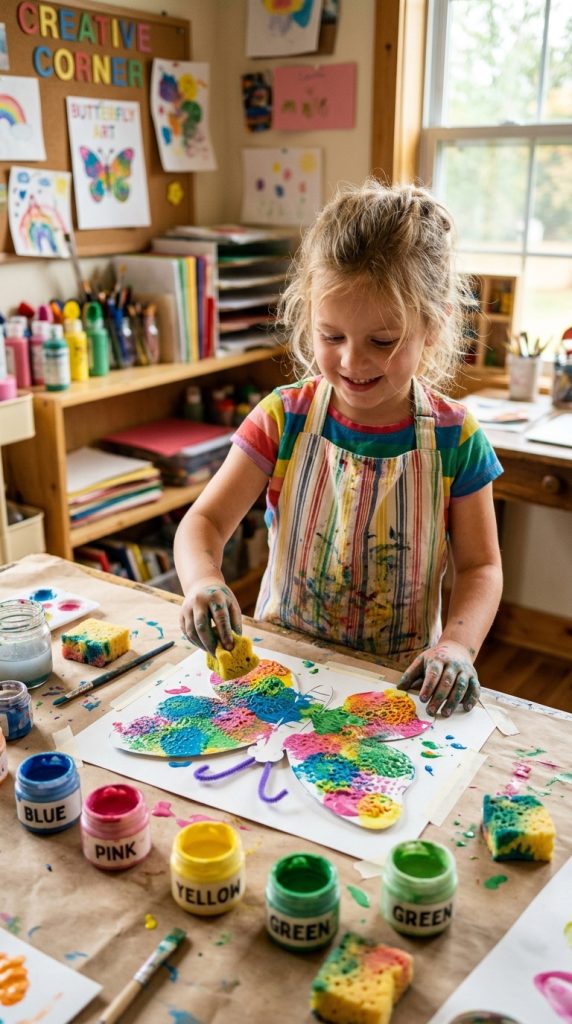
The practical process begins by cutting butterfly shapes from thick paper or cardboard. Small sponges dipped into washable paint are pressed onto the butterfly wings to create textured color patterns. Children can layer multiple colors or add dots and shapes to personalize their butterflies further. Pipe cleaners attached as antennae add dimension and movement to the final design. Glitter glue or stickers may also improve visual texture while keeping the activity beginner friendly. Organizing paint trays, sponge pieces, and drying areas beforehand helps maintain quick project timing and cleaner workspaces. This easy project supports hand coordination, color mixing, and artistic confidence while creating aesthetic handmade decoration suitable for classroom displays or seasonal home decor arrangements.
Idea 8: Paper Cup Frogs
Step-by-Step Guide
A paper cup frog craft transforms disposable cups into playful animal figures using simple decoration and assembly techniques. Pinterest inspiration frequently highlights paper cup crafts because they are affordable, fast, and highly adaptable for children’s activities. Frog designs work especially well because their bright colors and expressive faces encourage imaginative creativity and playful storytelling.
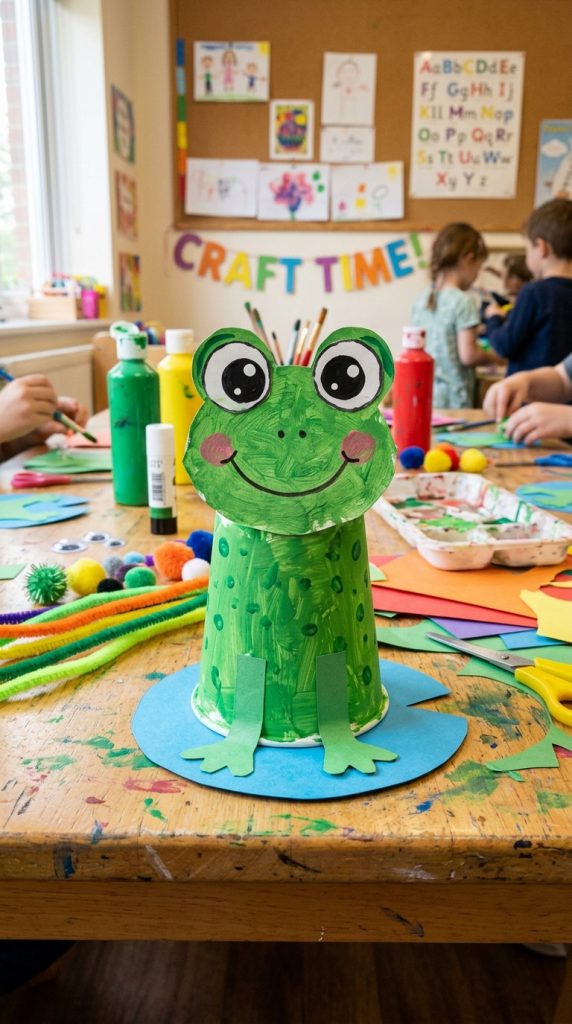
The installation process begins by painting or covering a paper cup with green construction paper. Large paper eyes are attached near the top edge, while folded paper legs are glued along the sides or bottom to create the frog body. Children may add spots, smiling faces, or long paper tongues using markers and colored paper. Pipe cleaners can also create flexible legs or decorative details for additional texture. Organizing templates and pre-cut pieces before starting simplifies the project for younger children and keeps the activity within a short timeframe. This beginner friendly craft supports creativity, cutting skills, and imaginative play while producing a fun handmade decoration suitable for classroom displays or pretend play sessions at home.
Idea 9: Button Caterpillar Craft
Execution Process
A button caterpillar craft creates colorful insect designs using simple arrangement and gluing techniques. Pinterest ideas often feature button crafts because they encourage pattern building and creative organization while using small decorative materials. Caterpillar themes remain beginner friendly because the body shape naturally forms through repeated circles and bright color combinations.
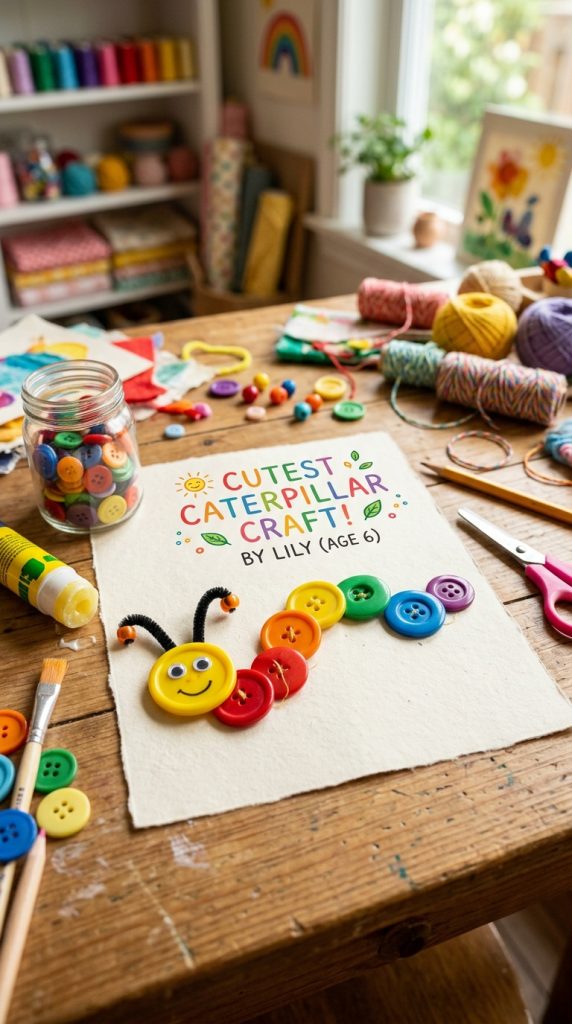
The execution process begins by arranging colorful buttons in a curved line across thick paper or cardboard to create the caterpillar body. Glue secures the buttons in place while children experiment with different sizes and colors for visual variety. Paper antennae, googly eyes, and drawn grass backgrounds complete the scene and improve decorative detail. Children may also add flowers, clouds, or sunshine using markers and stickers to expand the artwork into a larger creative project. Organizing buttons by color beforehand improves efficiency and helps younger children manage materials more comfortably. This easy project encourages pattern recognition, hand coordination, and creative decision making while producing an aesthetic handmade decoration suitable for display at home or school.
Idea 10: Mini Paper Pinwheels
How to Create
Mini paper pinwheels create playful spinning decorations using simple folding and fastening methods. Pinterest inspiration frequently highlights pinwheel crafts because they combine movement, color, and lightweight materials into fast and visually engaging projects. Children enjoy creating spinning toys while learning basic folding and shape construction techniques through this beginner friendly activity.
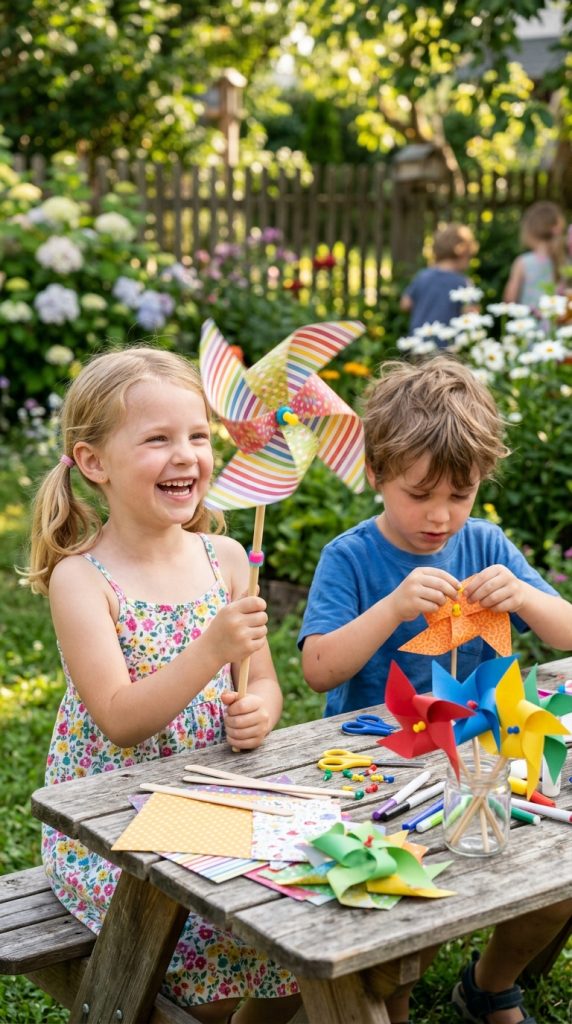
The practical setup begins by cutting square pieces of colorful paper and folding diagonal lines from each corner toward the center. Alternate corners are secured using a small fastener or glue to create the spinning pinwheel shape. A straw, stick, or pencil attached at the back forms the handle and allows the pinwheel to rotate in the wind. Children may decorate the paper beforehand using markers, stickers, or painted patterns to personalize their designs. Organizing paper squares and folding examples before beginning helps maintain smooth project flow during group activities. This DIY tutorial encourages hand coordination, folding accuracy, and creative decoration while producing an interactive handmade project that children can play with immediately after completing the craft.
Common Beginner Mistakes and How to Avoid Them
One common mistake during quick craft activities involves choosing projects with too many complicated steps. Children often lose focus when activities become overly detailed or require long drying times. Beginner friendly crafts with simple assembly methods help maintain engagement and improve completion rates. Another frequent issue involves poor workspace organization. Unsorted materials and crowded tables slow the activity and increase frustration during crafting sessions.
Using excessive glue or paint is another challenge that affects project stability and drying speed. Demonstrating controlled application methods helps children work more efficiently and maintain cleaner results. Lack of preparation also causes delays that interrupt the quick timing structure of ten minute crafts. Pre-cut templates, organized material trays, and prepared drying spaces simplify the process and improve activity flow. Adult supervision remains important when scissors or small decorative materials are involved. Encouraging creativity instead of perfection also improves confidence and reduces pressure during the crafting process. Organized planning, realistic project selection, and clear instructions help children complete quick craft activities successfully while maintaining enjoyable and creative experiences.
Practical Tips for Better Results
Using washable paints and child safe materials improves safety while simplifying cleanup after craft sessions. Organizing supplies into labeled containers also helps children locate materials quickly and maintain more organized workspaces. Covering tables with reusable mats or protective paper prevents damage and reduces cleanup time after painting or gluing activities. Step by step instructions should remain simple and visual to help younger children follow projects more independently.
Encouraging children to personalize colors, patterns, and decoration choices improves creative confidence and keeps activities more engaging. Background music or themed storytelling can also improve focus and create more enjoyable crafting environments. Drying stations should be prepared before beginning paint based projects to prevent smudging and accidental damage. Combining recycled materials with traditional craft supplies supports sustainable crafting habits while reducing costs. These practical organization strategies help children complete projects more comfortably while improving artistic results and maintaining smoother activity flow throughout the crafting session.
Styling, Presentation, or Organization Ideas
Displaying completed crafts creatively helps children feel proud of their work while improving classroom or home decor presentation. Wall displays arranged by color themes, seasons, or craft types create organized and visually engaging collections. Hanging strings, bulletin boards, or framed paper backgrounds help present lightweight projects attractively while preserving them longer. Tabletop displays with handmade scenery or decorative props also create interactive presentation environments.
Storage organization improves future crafting sessions and helps maintain cleaner creative spaces. Transparent containers labeled by material category simplify preparation and allow children to participate more independently in selecting supplies. Seasonal displays rotated throughout the year keep rooms visually fresh while encouraging continued creativity. Handmade signs, banners, or painted backgrounds also improve overall presentation quality during classroom events or family activities. Coordinated color palettes across multiple projects create stronger aesthetic balance within larger displays. These organization and styling techniques transform simple craft sessions into visually appealing creative projects that continue supporting artistic inspiration after the activity is complete.
Budget or Time Planning
Ten minute crafts remain affordable because most projects rely on inexpensive or recycled materials. Paper plates, cardboard tubes, craft sticks, and leftover paper scraps provide practical foundations for many DIY activities while reducing waste. Purchasing versatile supplies such as markers, glue, paint, and colored paper in larger quantities also improves efficiency for repeated craft sessions. Creating a material checklist before starting helps reduce unnecessary purchases and improves organization.
Time planning becomes easier when projects are divided into smaller stages such as preparation, decoration, assembly, and drying. Younger children benefit from simple activities with limited steps, while older children may enjoy slightly more detailed decoration work. Preparing templates and organizing materials before beginning reduces delays and helps maintain quick project timing effectively. Grouping similar supplies together also improves efficiency and simplifies cleanup afterward. These planning strategies help parents, teachers, and caregivers manage creative activities more successfully while maintaining organized and enjoyable crafting environments.
Creative Expansion and Advanced Inspiration
After completing basic ten minute crafts, children can expand projects into larger themed collections that encourage storytelling and imaginative play. Nature displays, underwater scenes, jungle habitats, or seasonal craft boards allow multiple projects to connect within one organized creative project. Additional handmade decoration elements such as clouds, trees, stars, or textured backgrounds improve visual depth and create more interactive displays.
Advanced inspiration ideas may include moving craft parts, layered textures, or mixed material combinations using fabric, recycled plastics, or clay. Children can also create puppet shows, decorative banners, or educational posters that combine crafting with learning activities. Seasonal variations such as winter snowflakes, spring flowers, or summer insects keep projects visually fresh throughout the year. Collaborative classroom murals or family craft displays encourage teamwork while supporting creative development. Combining painting, storytelling, and decorative techniques creates richer artistic experiences that extend beyond simple craft sessions. These advanced inspiration ideas help transform beginner friendly ten minute crafts into highly engaging creative activities that continue encouraging imagination, learning, and artistic confidence over time.