
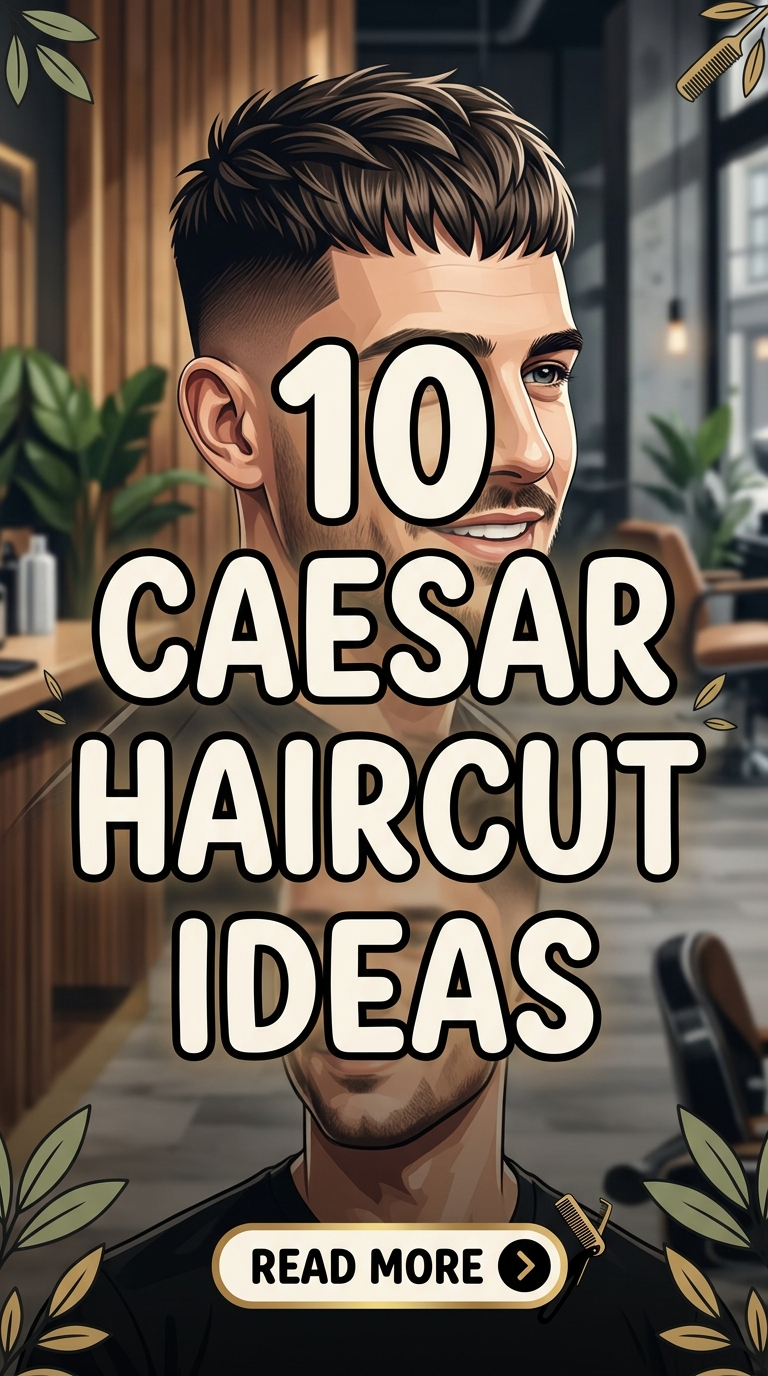
10 Caesar Haircut Ideas

The Caesar haircut is one of the most recognizable short hairstyles in men’s grooming and continues to appear frequently across Pinterest inspiration boards. The style is defined by its short, evenly cut length combined with a straight fringe across the forehead. This haircut creates a structured appearance while remaining simple to maintain, which explains its lasting popularity. Although the style has historical origins dating back to ancient Roman fashion, modern interpretations have evolved to include fades, textured tops, and layered finishes that adapt the haircut to contemporary trends.
Pinterest ideas often highlight the Caesar haircut because it works well with different hair textures and face shapes. The style keeps the sides and back relatively short while maintaining a slightly longer section on top that is brushed forward. This approach produces a balanced silhouette that frames the face while remaining practical for everyday grooming.
This article explores ten Caesar haircut ideas that demonstrate how the classic design can be adapted in modern ways. Each hairstyle explains the concept behind the cut and provides a step by step explanation of how the look can be achieved. Readers will learn how variations in texture, fade level, and fringe shape can transform the Caesar haircut while preserving its distinctive structure.
Why This Idea Is Trending or Useful
The Caesar haircut continues to trend on Pinterest because it combines simplicity with modern design flexibility. Many individuals prefer hairstyles that appear clean and structured while requiring minimal styling effort. The Caesar haircut meets this demand by maintaining short, even lengths that are easy to manage throughout daily routines. The straight fringe also creates a clear facial frame, which contributes to the haircut’s organized appearance.
Another reason the Caesar haircut remains popular is its adaptability. Pinterest boards frequently display different variations that combine the Caesar structure with fades, textured layers, or modern tapering techniques. These variations allow the haircut to suit both casual and professional environments. The style also complements a variety of hair textures, including straight, wavy, and slightly curly hair.
Accessibility is another key factor behind the haircut’s popularity. The Caesar style does not require complex styling tools or products to maintain its shape. Many individuals can recreate the look with simple trimming techniques and basic grooming tools. This practicality makes the haircut a reliable option for those seeking a hairstyle that remains tidy without requiring extensive maintenance.
Materials and Preparation
Preparing for a Caesar haircut requires basic grooming tools and careful planning to achieve the signature structure of the style. Professional barbers commonly use electric clippers with adjustable guards, hair cutting scissors, a fine comb, and sectioning clips to control the hair during cutting. A spray bottle with water can help dampen the hair slightly, allowing for more precise trimming. A cape or towel is also helpful for keeping loose hair away from clothing during the haircut process.
Preparation begins by washing and drying the hair so the natural direction of growth is visible. Clean hair ensures that the haircut remains even and symmetrical. The Caesar haircut typically features short hair on the sides and back with slightly longer hair on top. The fringe at the front is cut straight across, forming the defining feature of the style. Planning this fringe length before cutting is important because it determines the overall balance of the haircut.
Hair should be combed forward from the crown toward the forehead to visualize the final shape. Sectioning the hair into top, sides, and back areas helps maintain consistency throughout the haircut. Proper preparation allows the stylist to create smooth transitions and maintain the clean lines associated with the Caesar hairstyle.
MAIN IDEAS SECTION
Idea 1: Classic Caesar Haircut

How to Create
The classic Caesar haircut represents the original version of the style. This haircut features evenly cut hair across the entire head with a short fringe that sits just above the eyebrows. The sides and back remain slightly shorter than the top, but the transition between lengths remains subtle. The overall design produces a clean and balanced silhouette that highlights the straight fringe.
Pinterest hairstyle inspiration frequently highlights the classic Caesar haircut because it offers a timeless aesthetic that works well in both casual and professional environments. The haircut is particularly suitable for individuals who prefer short hairstyles that remain easy to maintain. Because the length is consistent across the head, the haircut requires minimal styling to keep its shape.
The straight fringe also creates a structured frame for the face. This feature helps balance facial proportions and gives the hairstyle a defined appearance. The classic Caesar haircut remains popular because it combines simplicity with reliable structure.
Creating the classic Caesar haircut begins by trimming the sides and back with clippers using a medium guard length. The barber works gradually around the head to establish an even base.
Next, the top section is trimmed with scissors while combing the hair forward. The stylist ensures that the top hair remains slightly longer than the sides while maintaining consistent length across the crown.
The final step involves shaping the fringe. The hair at the front is combed downward and cut straight across the forehead to create the signature Caesar fringe. Once the edges are refined, the haircut presents a clean and symmetrical appearance.
Idea 2: Textured Caesar Cut
Step-by-Step Guide
The textured Caesar haircut introduces layered movement to the classic structure. Instead of keeping the top completely even, the stylist adds subtle layers that create natural separation between strands. This variation produces a more relaxed appearance while maintaining the defining fringe of the Caesar style.

Pinterest inspiration frequently showcases textured Caesar cuts because they add dimension without changing the overall haircut structure. The layers allow the hair to move naturally, which can prevent the hairstyle from appearing flat. This approach works particularly well for individuals with thicker hair because it reduces bulk while maintaining a neat shape.
The textured Caesar cut still retains the straight fringe across the forehead. However, the layers behind the fringe create subtle variation in the hair’s surface. This balance between structure and texture helps the hairstyle appear modern while remaining recognizable.
To create this variation, the barber first trims the sides and back using clippers with a slightly shorter guard. This step establishes the base fade around the head.
Next, the top hair is cut with scissors using a point-cutting technique. Point cutting involves trimming the hair at slight angles to create irregular ends that enhance texture.
After layering the top, the fringe is shaped carefully to maintain its straight edge. The final haircut combines the structured fringe with softly layered texture behind it.
Idea 3: Caesar with Low Fade
How to Make

The Caesar haircut with a low fade modernizes the classic style by introducing a gradual fade around the sides and back. The fade begins near the lower portion of the head and blends smoothly into the longer top section. This technique creates a sharper contrast between the sides and the fringe while maintaining the recognizable Caesar structure.
Pinterest boards frequently highlight this haircut because the fade adds a contemporary element to a traditional style. The gradual transition between lengths produces a clean outline that emphasizes the shape of the haircut. The fringe remains straight across the forehead, preserving the defining feature of the Caesar style.
The low fade also enhances the overall silhouette of the haircut by creating a smooth gradient along the sides. This variation works well for individuals who want a modern appearance without abandoning the classic Caesar design.
Creating the Caesar with low fade begins by trimming the sides and back with clippers using progressively shorter guards. The fade starts near the ear line and gradually shortens toward the neckline.
Next, the top hair is trimmed with scissors to maintain consistent length while blending smoothly with the faded sides.
The fringe is then combed forward and cut straight across the forehead. This final step ensures that the haircut retains the classic Caesar structure while incorporating the modern fade.
Idea 4: Curly Caesar Haircut
How to Create
The curly Caesar haircut adapts the traditional style for naturally curly hair textures. Instead of forcing the hair to lie flat, this variation allows curls to remain visible while maintaining the short fringe structure. The curls create natural volume and movement across the top of the head.
Pinterest hairstyle inspiration frequently features curly Caesar cuts because they highlight texture while maintaining a manageable length. The curls soften the straight fringe slightly, creating a relaxed appearance without removing the defining feature of the haircut.

The sides and back are typically kept shorter to control volume. This structure allows the curls on top to stand out while keeping the haircut balanced.
To create this haircut, the barber begins by trimming the sides and back using clippers. The fade or taper around the head reduces excess bulk.
Next, the curls on top are trimmed with scissors while maintaining enough length for the natural curl pattern to form.
The fringe is shaped gently so it sits slightly above the eyebrows. This approach preserves the Caesar structure while embracing natural curl texture.
Idea 5: Short Caesar Crop
Execution Process

The short Caesar crop reduces the overall hair length while maintaining the straight fringe. This variation creates a sharper and more minimal hairstyle.
The barber trims the entire head using shorter clipper guards while maintaining a slightly longer fringe.
The result is a compact and low-maintenance hairstyle that remains neat and structured.
Idea 6: Caesar with Tapered Sides
How to Make

The tapered Caesar haircut gradually shortens the hair along the neckline and sideburns while keeping the top consistent.
The barber uses clippers to taper the edges before trimming the top with scissors.
This variation maintains the Caesar fringe while creating a refined silhouette.
Idea 7: Wavy Caesar Style
Step-by-Step Guide
The wavy Caesar haircut emphasizes natural wave patterns in the hair while preserving the short fringe.

The barber trims the sides with clippers and shapes the waves on top with scissors.
The waves add natural movement to the hairstyle.
Idea 8: Caesar with Mid Fade
How to Create
The mid fade variation raises the fade slightly higher along the sides while maintaining the Caesar fringe.

The barber blends the fade gradually before shaping the top.
This haircut creates a modern and balanced appearance.
Idea 9: Caesar with Hard Part
Execution Process
This variation introduces a shaved part line along the side of the head.

The barber completes the fade and then uses a precision trimmer to carve the part.
The hard part adds visual contrast to the haircut.
Idea 10: Messy Caesar Style
How to Create
The messy Caesar haircut adds texture to the top section while maintaining the fringe structure.
The barber layers the hair using point-cutting techniques.

The final hairstyle appears relaxed and modern.
Common Beginner Mistakes and How to Avoid Them
One frequent mistake when creating a Caesar haircut is cutting the fringe too short. Maintaining the correct fringe length ensures the hairstyle frames the face properly. Another issue occurs when the sides are not blended smoothly into the top section.
Practical Tips for Better Results
Using consistent clipper guard lengths helps maintain symmetrical sides. Regular trims also preserve the clean outline of the haircut.
Styling, Presentation, or Organization Ideas
The Caesar haircut can be styled simply by combing the hair forward. Light texture can also enhance the layered variations.
Budget or Time Planning
Short hairstyles like the Caesar typically require maintenance trims every four to six weeks to maintain their shape.
Creative Expansion and Advanced Inspiration
Advanced variations may include fades, shaved designs, or subtle color highlights that enhance the visual structure of the Caesar haircut.